Pet Microchipping in Thailand: What You Need to Know
Microchipping your pet in Thailand costs between 500-2,000 baht at most veterinary clinics, though the procedure itself isn't legally required by Thai national law-but registration with your local animal control office is strongly recommended, especially if you travel internationally or want a reliable way to recover a lost pet.
Whether you're moving to Thailand with a dog or cat, or you already live here and are thinking about microchipping, this guide covers what you actually need to do, what it costs, and whether it's worth it for your situation.
What Is Pet Microchipping and How Does It Work
A microchip is a tiny device-roughly the size of a grain of rice-that's inserted under your pet's skin between the shoulder blades. It contains a unique identification number linked to your contact details.
Here's the practical reality: the microchip itself does nothing on its own. It has no battery, no GPS, and no way to send a signal. It only works when a scanner passes over it. A vet, animal shelter, or rescue organisation uses a handheld scanner to read the number, then looks up your information in a registration database. That's it.
According to the American Veterinary Medical Association, microchips are a passive identification method-they're useful only if someone finds your pet and has access to a scanner and the right database. They don't help locate a lost pet actively. But they do solve a critical problem: if your pet ends up at a shelter or clinic with no collar or ID tag, the microchip gives staff a way to contact you.
The procedure takes about 30 seconds. A vet injects the microchip using a needle and syringe, much like a vaccine injection. It's not painless, but most pets tolerate it well. There's no surgery, no anaesthesia needed, and recovery is immediate. Some vets use numbing spray first, which can reduce discomfort-it's worth asking about when you book.
Microchipping Laws and Requirements in Thailand
Thailand does not have a national law requiring all pet owners to microchip their dogs or cats. You will not face a fine or legal penalty if you don't microchip your pet.
However, if you plan to travel internationally with your pet or bring a pet into Thailand from abroad, microchipping is often a legal requirement in the destination country or for import into Thailand. Many countries now require a microchip as part of their pet health and safety regulations.
Locally, some animal control offices recommend or encourage microchipping as best practice, but it's not mandatory. That said, registration at your local animal control office is still a good idea if your pet goes missing, since local authorities can help reunite you with your pet if they pick it up.
Cost of Microchipping in Bangkok and Beyond
The cost of microchipping in Thailand typically ranges from 500 to 2,000 baht, depending on the clinic.
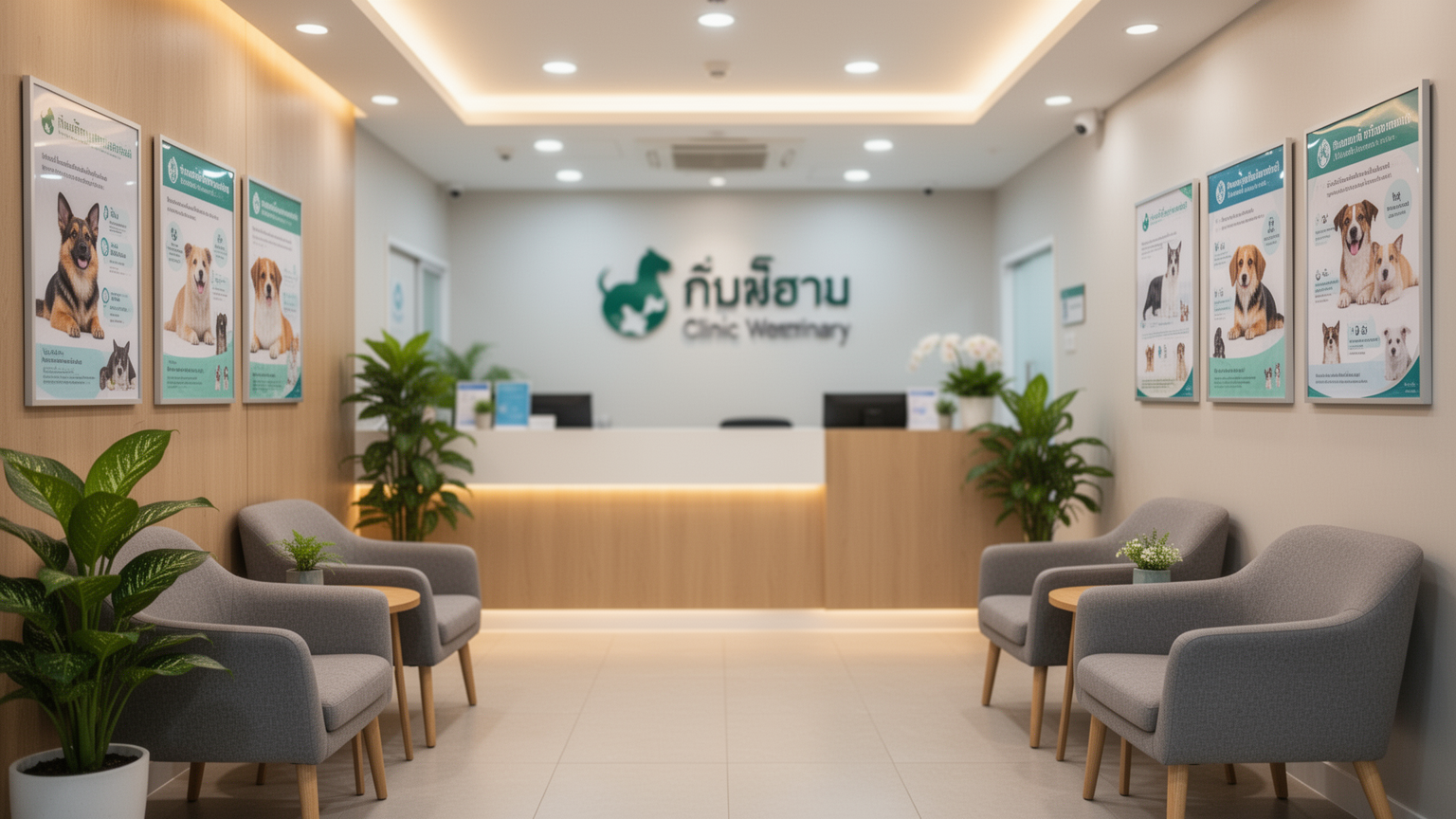
What affects the price:
- Clinic type and location. Large, international-standard clinics in urban areas tend to charge more than smaller local veterinary practices. AAHA-accredited facilities adhere to higher standards, which is reflected in their fees.
- Microchip brand and database registration. Some clinics include database registration in the price; others charge separately. Always confirm what's included before you pay.
- Whether it's combined with another service. If you're getting your pet vaccinated or checked during the same visit, you might save on the overall cost.
- Region. Pricing varies outside major urban centres, though microchipping remains affordable nationwide.
Get a quote from at least two clinics before deciding. Ask specifically what's included-the microchip, insertion, and database registration should all be clear.
Pet Microchip Registration in Thailand
Inserting the microchip is only the first step. Registration is what makes it useful.
When your vet inserts the microchip, they'll provide you with the microchip number. You then need to register that number and your contact details in a pet recovery database. In Thailand, the main registration options are:
-
Thai national pet registry systems. Some local animal control offices or veterinary associations maintain their own databases. Ask your vet which database they recommend and how to register. They may handle registration for you during the appointment.
-
International microchip registries. If you plan to travel internationally with your pet or want access to a global database, you can register your microchip with an international registry. This takes 10-15 minutes online and costs little to nothing, though some charge a small fee.
What you'll need to register: - Your pet's name, species, breed, colour, and date of birth - Your full name, phone number, and address - The microchip number (provided by your vet) - Ideally, a photo of your pet
Keep your registration information up to date. If you move house or change your phone number, update the database immediately. A microchip is only useful if the contact details it points to are current.
International Travel and Cross-Border Recovery
If you're planning to travel internationally with your pet or move to another country, microchipping becomes crucial. Most countries now require proof of microchipping before allowing a pet to enter or to leave.
When you travel, your pet will also need: - A health certificate from a vet - Proof of vaccination (usually rabies) - A microchip registered in an internationally recognised database
The microchip number and your contact details should be accessible to veterinary clinics and authorities in other countries, so using an international registry (rather than only a local Thai database) is worth considering if you plan to travel.
Even if your pet is lost while abroad, an international registry gives you a better chance of recovery, since any vet or shelter with a compatible scanner can look up your details.
Benefits and Limitations of Microchipping
Real benefits:
- If your pet is taken to a shelter or vet clinic, staff can quickly identify and contact you.
- It's permanent identification that can't be lost (unlike collars and tags).
- It's useful for travel and import/export requirements.
- It gives you proof of ownership if there's a dispute.
Important limitations:
The AVMA is clear on this point: a microchip does not help locate a lost pet. It doesn't have GPS, doesn't transmit a signal, and doesn't work unless someone scans it. If your pet wanders off and isn't found by another person, a microchip alone won't bring them home.

A microchip is a backup safety measure, not a primary security tool. It works best alongside: - A physical collar with an ID tag and your phone number - Training to ensure your pet doesn't bolt from open doors - Awareness of your pet's habits and neighbourhood
Who benefits most from microchipping:
- Pet owners planning to travel internationally
- Owners of outdoor or adventurous pets
- Anyone importing a pet into Thailand
- People in urban areas where lost pets often end up at shelters
- Owners who want permanent proof of ownership
Who might skip it:
- Owners of indoor-only pets with no travel plans and no international move planned
- People with very limited budgets (though at 500-2,000 baht, it's still affordable)
- Pets already wearing a secure collar with current contact details
The decision depends on your situation. If you travel, move countries, or have an outdoor pet, microchipping is worth doing. If your pet never leaves home and you have no travel plans, a good collar and ID tag might be enough-but microchipping adds a safety net at low cost.
FAQ
Does my pet need to be vaccinated before microchipping?
No. Microchipping has no connection to vaccination status. You can microchip an unvaccinated pet. However, if you plan to travel internationally, you'll need both a microchip and proof of vaccination (usually rabies), so plan accordingly.
Can I microchip my pet at home?
No. Microchipping must be done by a licensed veterinarian. The needle is thicker than a regular vaccine needle, and a vet needs to ensure proper placement under the skin to ensure the scanner can read it later. Always go to a clinic.
Will my pet's microchip work in other countries?
That depends on the registry and the microchip standard. There are two main microchip standards globally (ISO and FDX). Most modern scanners can read both, but to be safe, register your microchip with an international database so your details are accessible to vets and shelters worldwide, not just in Thailand.
What happens if my pet's microchip stops working?
Microchips are designed to last your pet's entire life. They have no battery and don't wear out. The only reason a scan might fail is if the chip shifts position under the skin (rare) or if it was inserted incorrectly. Your vet can scan your pet annually to confirm it's readable.
If I microchip my pet but don't update the registration, what happens?
The microchip will still be readable, but the contact details will be wrong or missing. This defeats the purpose. Anyone who finds your pet and scans it will be unable to reach you. Always register the microchip, and keep your details current.
Sources
American Veterinary Medical Association - Pet Owner Resources - technology overview, benefits, and limitations of microchipping for pet recovery and identification.
American Animal Hospital Association - Your Pet - accreditation standards and quality benchmarks for veterinary facilities offering microchipping services.