Moving Your Pet Out of Thailand: A Complete Step-by-Step Guide
You need to start planning 8-12 weeks before your departure date, complete health certificates and vaccinations in a specific order, and obtain import permits from your destination country before booking your pet's flight. The process is less complicated than it seems, but it does have a rigid sequence-miss one step or get the timing wrong, and you'll face delays, extra costs, or even a refusal at the border. This guide walks you through exactly what to do, in what order, and what to watch for.
Why Pet Relocation From Thailand Is Different (and Harder Than You Think)
Moving a pet internationally is more complicated than a domestic move because you're navigating rules from two countries at once: Thailand's export requirements and your destination's import requirements. Each has its own timeline, and they overlap in ways that can trip you up if you don't plan carefully.
Thailand itself doesn't have especially restrictive export rules for pets, which is good news. The real complexity comes from your destination. Some countries require rabies antibody blood tests (a serological test that takes weeks to process). Others insist on import permits issued months in advance. A few demand quarantine on arrival. These aren't suggestions-they're hard rules enforced by customs and agriculture authorities.
The other reason it's harder is time. You can't compress the process. Vaccinations have minimum intervals. Health certificates have expiration windows. Blood tests take time to send to labs and return. If you've ever had a blood test take longer than expected, you know the feeling-multiply that by the fact that you're now working across international mail and weekend closures.
One more thing: airlines have their own rules about how pets must be crated, what temperatures they'll tolerate, and which breeds they'll even accept. These rules are non-negotiable and often stricter than what the law requires.
The combination of all three-destination country rules, Thai export rules, and airline rules-is what makes this feel overwhelming. But they're all separate, manageable pieces if you approach them in the right order.
The Real Timeline: When to Start and Why

Start researching and planning 12 weeks before your move. Here's why each phase matters:
Weeks 12-10: Research and vet consultation. Contact your destination country's agriculture or customs authority to find out exactly what they require. Write it down. Ask specifically about rabies serological testing, import permits, quarantine, and breed restrictions. Book a consultation with a veterinarian in Thailand who has experience with international pet export. This isn't a routine checkup-you need someone who understands the timing windows and the specific requirements of your destination. Many vets in Thailand handle this regularly and can save you weeks of confusion.
Weeks 10-8: Vaccinations and baseline health work. Your vet will advise you on timing, but rabies vaccination and other core vaccines typically need to be given in a specific order. According to WSAVA vaccination guidelines, rabies vaccination must be current and within a set window-not too recent (usually at least 30 days after vaccination) and not too old (usually no more than 12 months, though some destinations require 3 years of protection, which is a different type of vaccine). Your vet will explain this and may need to space out multiple vaccines across weeks.
This is also when you'll get a baseline health check and discuss any conditions your pet has. If your pet needs special arrangements (calming medication, a particular crate size, regular movement during travel), flag it now.
Weeks 8-6: Health certificate application and blood work. Once vaccinations are complete and the required intervals have passed, your vet will draw blood if a serological test (rabies antibody test) is required. This sample goes to a lab, often internationally, and can take 2-4 weeks to return. Don't wait to do this. Simultaneously, your vet will start the health certificate process. In Thailand, the AVMA advises that health certificates must be issued by a licensed veterinarian and signed by an official state or federal veterinarian-in Thailand's case, that's the Department of Livestock. Your vet will handle the submission and sign-off, but you need to know it takes time.
Weeks 6-4: Import permits and official documents. By now, your serological test results should be back (or close). Simultaneously, apply for any import permits your destination requires. This is done by contacting your destination's agriculture department directly-not your vet, not an airline, but the official government body. Some countries issue permits online in days; others take weeks. Do not skip this step because your pet cannot legally enter the country without it.
Weeks 4-2: Airline booking and final checks. Once you have your health certificate, serological test results, and import permit, you can book your pet's flight with confidence. Airlines have specific rules for live-animal transport: crate dimensions, ventilation, temperature ranges, and breed restrictions. According to IATA Live Animals Regulations, crates must meet certain construction standards (solid walls, adequate ventilation, proper labeling) and airlines must maintain temperature control during transport. Book early-pet spaces are limited, and some airlines don't allow pets in cargo during hot months.
Weeks 2-departure: Final arrangements. Arrange transport to the airport, confirm your pet's crate fits airline standards, and plan for collection or quarantine at your destination. If quarantine is required, book accommodation for your pet in advance.
Step-by-Step Paperwork Checklist
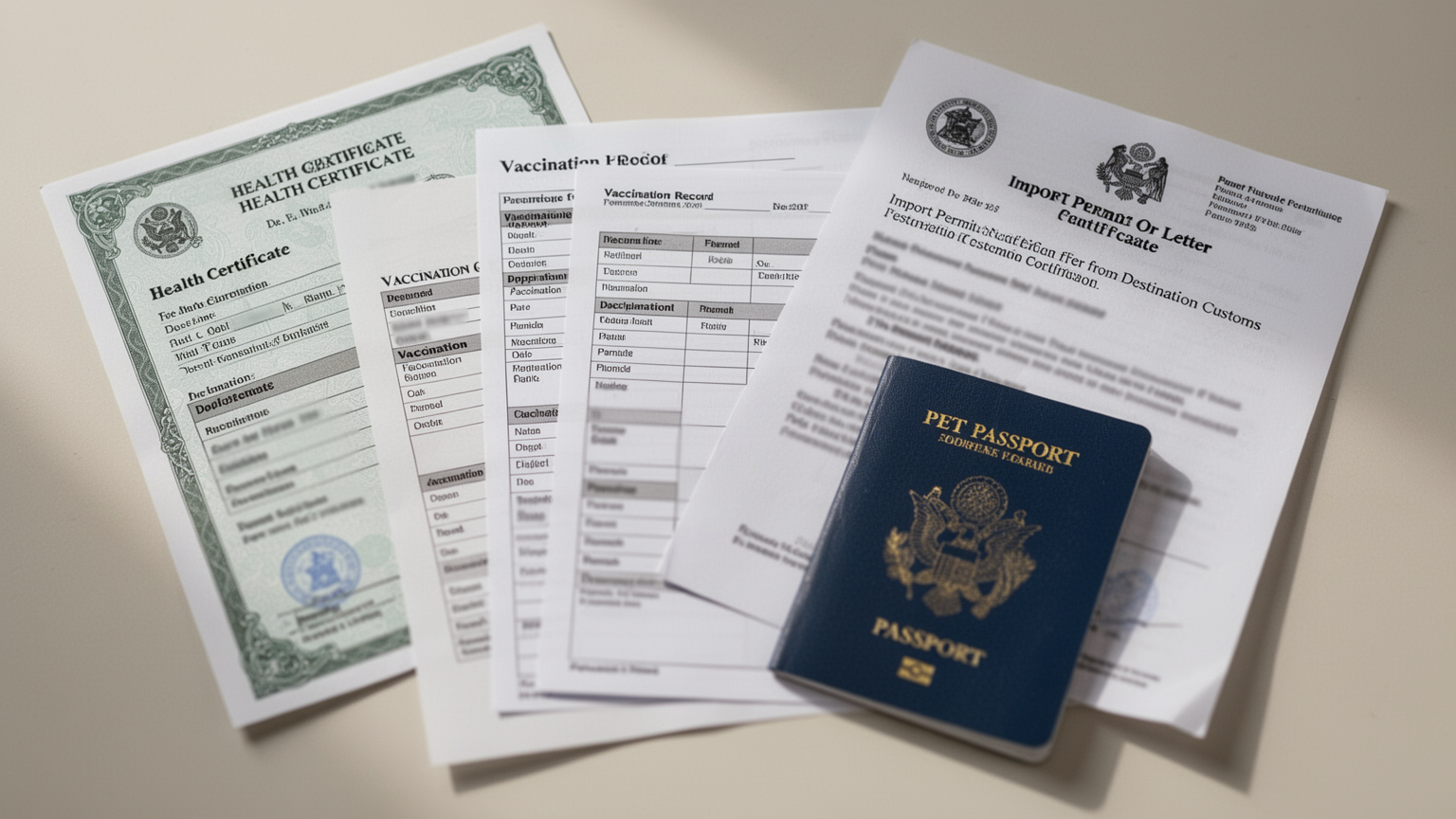
Here's what you'll need by departure day. Keep a copy of everything-originals for customs, copies for your records.
From your veterinarian in Thailand:
- Health certificate (issued within a set window, usually 10 days before travel; AVMA guidelines specify what this must include: identification of the animal, vaccination history, exam findings, and the vet's signature and license number)
- Proof of rabies vaccination (dated and with the vet's stamp)
- Proof of other core vaccines relevant to your destination
- Serological test results, if required (showing rabies antibodies at an acceptable level)
- Any vaccination certificates in the vaccine manufacturer's format (some countries and airlines request this specifically)
From your destination country's government:
- Import permit or official approval
- Any breed restrictions or special requirements in writing
- Proof that your documents meet their standards
From the airline:
- Confirmation of your pet's booking
- Crate specification sheet (so you buy or arrange the right crate)
- Confirmation that your pet's breed is accepted (not banned)
- Any special handling instructions
In your possession:
- Microchip number and registration details (and verify the microchip is registered with a recovery service)
- Photos of your pet (helpful for identification if something goes wrong)
- Your vet's contact details and after-hours emergency contact in Thailand
- A veterinary contact in your destination country (for arrival health checks if needed)
Common Mistakes That Cost Money, Time, or Both
Vaccinating too early or too late. If your rabies vaccine is given less than 30 days before your departure (or your destination's required window), your departure will be delayed. If your vaccine is older than your destination allows, you'll need a booster, pushing back your timeline. WSAVA guidelines specify these windows clearly-ask your vet to confirm your pet's vaccination date meets your destination's requirements before you finalize your move date.
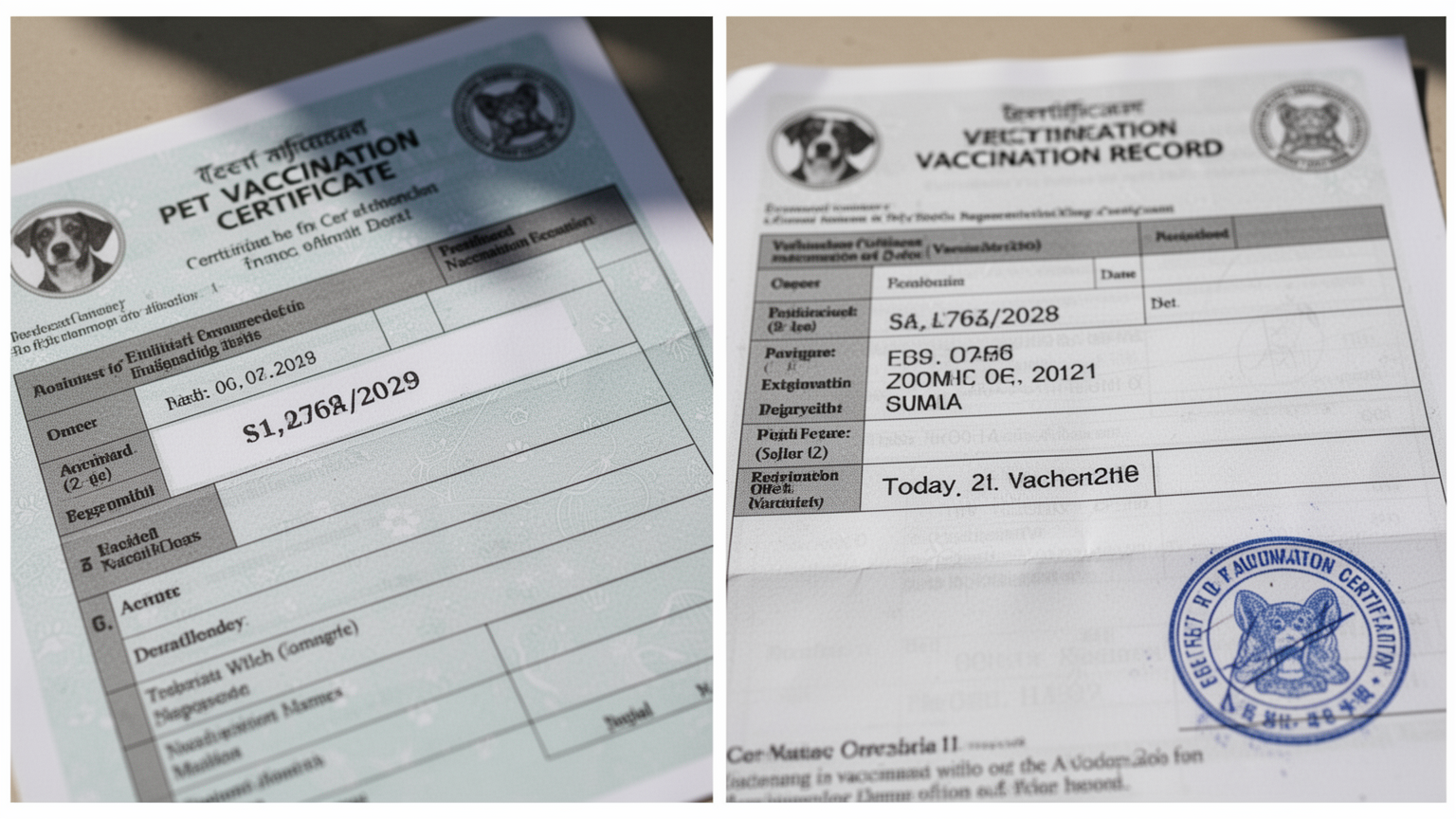
Skipping the serological test until the last minute. If your destination requires a rabies antibody test and you order it two weeks before you leave, you'll miss your flight. These tests take 2-4 weeks and are often sent to a lab in another country. There's no fast-track option. Plan for this from week 8.
Not confirming import requirements directly with the destination country. Many people ask "what does Australia require?" of their vet or an airline, get second-hand information, and then arrive with the wrong paperwork. Call or email your destination's agriculture authority directly. You'll get the definitive answer, and you'll have it in writing.
Assuming the airline will accept your pet if the law allows it. The law might allow your pet to fly, but the airline might not. Some airlines don't transport flat-faced breeds (like Persians or Bulldogs). Some don't fly pets in summer. Some don't allow pets in cargo at all, only in-cabin. Check directly with the airline you plan to use before you commit to a move date.
Getting a health certificate too early. Most destinations require the health certificate to be issued within 10 days of departure. If you get one 14 days ahead, it may be invalid. Ask your vet about the exact timing for your destination.
Forgetting to update your pet's microchip registration. Your pet will have a microchip (required by most countries). Make sure the registration details are correct and current, with your new address and phone number, so you can be contacted if something goes wrong.
Pet Relocation Specialist vs. DIY: The Cost-Benefit Reality
You can do this yourself. Thousands of pet owners do. But whether you should depends on your destination, your tolerance for detail work, and your budget.
DIY makes sense if:
- Your destination has straightforward import rules (few countries, clear documentation)
- You have time to research and manage communication across three parties: your Thai vet, your destination's government, and the airline
- You're comfortable organizing your pet's vaccinations, blood tests, and health certificates yourself
- You're moving far enough out (12+ weeks) that delays won't derail your move
DIY typically costs less-you're paying only for the vet services and permits, which are fixed. Expect to spend 10-15 hours researching, coordinating, and following up over those weeks.
Hiring a specialist makes sense if:
- Your destination has complex or unusual rules
- You're moving with less than 10 weeks' notice (though even a specialist can't compress blood tests)
- You're managing the move from abroad and can't visit the vet in person
- You want someone else to own the risk of missing a deadline or misinterpreting requirements
A specialist will manage all communication, ensure documents are correct, and chase down results. Many will also arrange the crate and handle logistics up to the airport (or even beyond). This costs more-typically a few hundred dollars on top of vet and permit fees-but removes the cognitive load and reduces the risk of mistakes.
The hidden cost of DIY is time lost to back-and-forth emails and calls. If your time is scarce or your move is tight, the specialist's fee is often worth it.
Red flags when considering a specialist:
- They claim they can "definitely" shorten the timeline (they can't; the vet, tests, and government rules set the pace)
- They guarantee "stress-free" travel (no relocation is stress-free for the animal; reputable specialists manage expectations honestly)
- They won't explain what they're doing or why
- They pressure you to decide quickly without letting you verify their claims
Choosing Your Destination and Airline Partner
Once you know your destination country, confirm its exact requirements. Don't assume all countries in a region have the same rules-they don't.
Contact the destination's agriculture, customs, or animal health authority directly. They'll tell you:
- Whether an import permit is required and how to apply
- Vaccination requirements (rabies, others)
- Whether a serological test is mandatory
- Whether quarantine is required on arrival
- Any breed or species restrictions
- Health certificate requirements
Then, research airlines that fly the route you need. Call or email at least two and ask:
- Do they transport pets in cargo or only in-cabin, or both?
- What are their crate specifications? According to IATA Live Animals Regulations, crates must be escape-proof, have adequate ventilation, and meet specific dimension standards
- Do they accept your pet's breed?
- What is the temperature-controlled environment during transport?
- What is their policy if your pet arrives and can't be collected immediately?
- Are there date or season restrictions (e.g., "no pets in cargo during summer months")?
Some airlines are more experienced with live-animal transport than others. If you have a choice, pick one with a good track record and clear policies. The cheapest ticket isn't always the best option if the airline has poor communication or limited experience.
Once you've chosen your airline, confirm their requirements in writing and make sure they align with your destination's rules. If they conflict (one requires something the other doesn't), the stricter rule applies-you'll follow both.
FAQ
Q: Can I give my pet calming medication for the flight? A: Only with veterinary guidance. Some medications are safe for air travel; others aren't. Your vet can advise on what's safe for your pet's age, weight, and health. Sedation itself carries risks in flight (changes in air pressure and oxygen levels), so it's not routine. Discuss this weeks in advance, not the day before.
Q: What happens if I miss the health certificate deadline? A: You'll need a new one. Health certificates expire, and most must be issued within 10 days of travel. If you miss this window, your vet will need to re-examine your pet and issue a new certificate, delaying your departure. Plan your timing carefully and confirm the exact deadline with your vet.
Q: Do I need to quarantine my pet in Thailand before departure? A: Not typically for export from Thailand. However, some destinations require quarantine on arrival. This is part of your destination's import rules, not Thailand's export rules. Plan ahead if quarantine is required-you'll need to arrange accommodation for your pet at a licensed facility in your destination.
Q: What if my pet doesn't fit in the approved airline crate? A: You'll need to work with the airline and possibly your vet to find a solution. This might mean using a larger crate (if space exists), flying with a different airline, or, in rare cases, shipping your pet through a specialist service instead of a standard flight. These options take time and money, so check airline crate specs early.
Sources
IATA - Live Animals Regulations - Crate standards, temperature control, and airline live-animal policies for safe pet transport.
AVMA - Pet Owner Resources - Health certificate requirements, veterinary timelines, and pre-export guidance for international pet movement.
WSAVA - Vaccination Guidelines - Rabies vaccination timing, intervals, and antibody test standards for international travel.