Managing Your Double-Coated Dog's Shedding in Thailand's Heat: A Safe Grooming Guide
In tropical heat, double-coated dogs shed heavily and need regular de-shedding-but shaving is not the answer. The safest approach is to rake or blow out the undercoat every 3 to 6 weeks during hot months, or use professional de-shedding services if you can't do it yourself. Shaving removes the coat's natural insulation and UV protection, and can permanently damage the hair structure in some breeds.
This guide will help you choose the right de-shedding method for your dog, understand the health risks of each approach, and build a realistic grooming plan that keeps your dog comfortable without harming their coat.
Why Double-Coated Dogs Need Special Care in Tropical Heat
Double-coated breeds-like Golden Retrievers, German Shepherds, Huskies, and Corgis-have two layers of fur. The outer layer (guard hairs) sheds slowly and protects against UV rays and moisture. The undercoat is dense, soft, and traps air for insulation. In cold climates, this traps warmth. In tropical heat, it can trap moisture and heat against the skin.
According to the AKC, the double coat also regulates body temperature by allowing air to circulate close to the skin. In humid environments, a matted or poorly maintained double coat loses this function and can lead to skin irritation, hotspots, and fungal infections.
The problem isn't the coat itself-it's the buildup of shed undercoat hair that prevents proper air circulation. When this dead hair isn't removed, it acts like a blanket, trapping heat and moisture against the skin. This is why regular de-shedding is essential in Thailand's climate.
Shaving vs. De-shedding: The Critical Difference
This distinction is important because the two methods are not interchangeable, and they have very different outcomes.
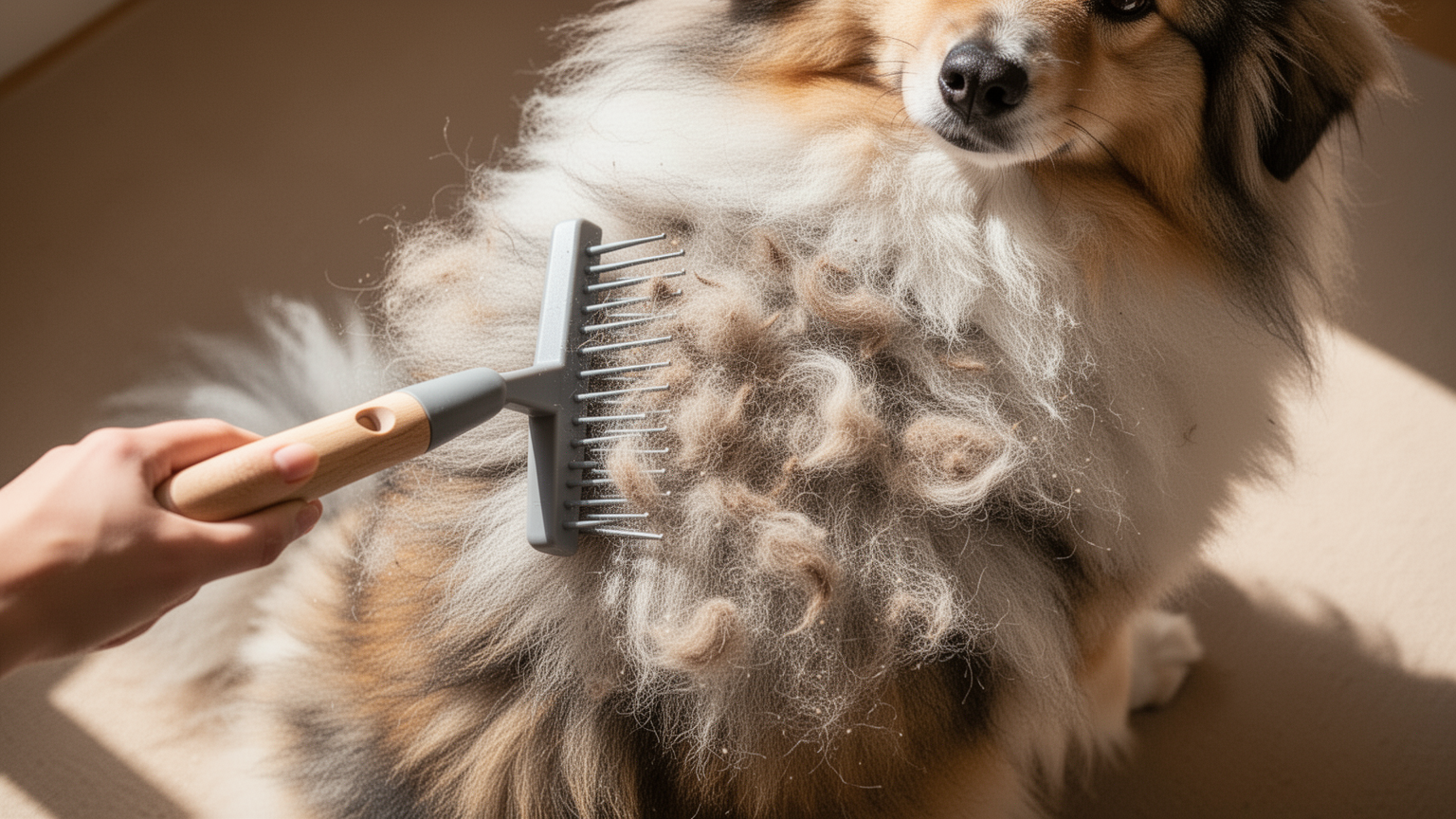
De-shedding removes loose, dead undercoat hair that's already shedding out naturally. The tools (rakes, high-velocity blowers, or professional grooming equipment) pull away hair that's ready to fall out anyway. The coat structure and living hair roots stay intact. This is safe to do frequently and actually improves air circulation.
Shaving cuts all the hair-guard hairs, undercoat, and living roots-very short or to the skin. It's permanent until the coat grows back (which takes 3-6 months or longer). Once shaved, the coat may grow back thinner, with altered color or texture, especially in double-coated breeds.
VCA Animal Hospitals advises against shaving double-coated dogs for heat relief because the coat is not designed to grow back the same way. The guard hairs protect the undercoat; without them, the undercoat grows back denser and less functional. Many owners report that their dog sheds worse after shaving, not better.
Shaving may be appropriate only in these cases: - Severe matting that cannot be removed any other way - Medical reasons (skin infection, post-surgery recovery) approved by a veterinarian - End-of-life comfort care
For heat management and routine shedding control, de-shedding is the right choice.
De-shedding Methods: Raking, Blowouts, and Professional Options
There are three main ways to de-shed a double-coated dog. Each has trade-offs in time, cost, and effectiveness.

Undercoat Rake (At-Home)
A undercoat rake is a handheld tool with short, close-set teeth that grab loose undercoat without cutting the guard hairs. You drag it gently through the coat in the direction of hair growth.
Pros: - Low cost (typically 300-800 baht) - No skill required; can start in 10 minutes - Gives you control and lets you check for skin issues - Can do it whenever you notice shedding
Cons: - Time-intensive (30-90 minutes for a large dog) - Less effective than professional tools on very dense or matted coats - Easy to miss undercoat deeper in the coat - Risk of scratching skin or breaking guard hairs if you rake too hard
Best for: Small to medium dogs, owners with time and patience, mild to moderate shedding.
High-Velocity Blower (DIY or Professional)
A high-velocity dryer uses compressed air to blow loose hair out of the coat. Professional grooming dryers are very powerful; consumer-grade pet dryers are gentler but still effective.
Pros: - Fast (15-45 minutes depending on coat density) - Reaches deeper layers of undercoat - Can be done at home with a consumer blower - Removes a large volume of shed hair in one session
Cons: - Noise (very loud) can stress some dogs - Consumer dryers (1500-3000 baht) are less powerful; professional results require a professional tool - Risk of over-drying skin if used too frequently or too close - Wet coats don't respond well; dog must be dry first
Best for: Medium to large dogs, owners who have a dryer or access to one, heavy shedding, dogs comfortable with noise.
Professional De-shedding Service
A groomer uses industrial-grade equipment (rakes, high-velocity blowers, sometimes specialty shampoos) to remove undercoat. This is often called a "de-shedding treatment," "undercoat removal," or "shedding package."
Pros: - Most thorough; removes more undercoat than home methods - Fast (30-90 minutes) - Groomer can assess coat condition and flag skin issues - Good option if you're unsure how to rake safely
Cons: - Cost varies (1500-5000+ baht per session depending on dog size and salon) - Must find a groomer experienced with double-coated breeds - Travel time - Not always necessary if raking or blowing out at home works
Best for: Large dogs, dogs with very dense coats, owners without time or confidence to DIY, or as an occasional deep clean between home sessions.
VCA Animal Hospitals recommends professional grooming every 4-8 weeks during peak shedding season for double-coated breeds in warm climates, with home maintenance between visits.
De-shedding Frequency in Thailand's Heat
How often you de-shed depends on the season, individual shedding rate, and humidity.
During hot, dry months (peak shedding): Every 3-4 weeks. This is when most double-coated dogs shed the heaviest. More frequent removal keeps the coat functional and reduces matting.
During cooler months or lower-shedding periods: Every 5-8 weeks or as needed. If you notice loose hair when you brush, it's time.
Signs your dog needs de-shedding sooner: - Clumps of loose hair come out when you brush lightly - The coat feels matted or sticky (usually humidity-related) - You see redness or irritation on the skin underneath - Your dog is scratching more than usual
Do not de-shed more frequently than every 3 weeks unless advised by a veterinarian, as this can irritate the skin. Do not wait longer than 8 weeks during hot months, as shed undercoat buildup defeats the purpose.
Breed-Specific Risk and Grooming Frequency
Not all double-coated breeds are equally at risk in tropical heat. Some are bred for cold climates and struggle more.
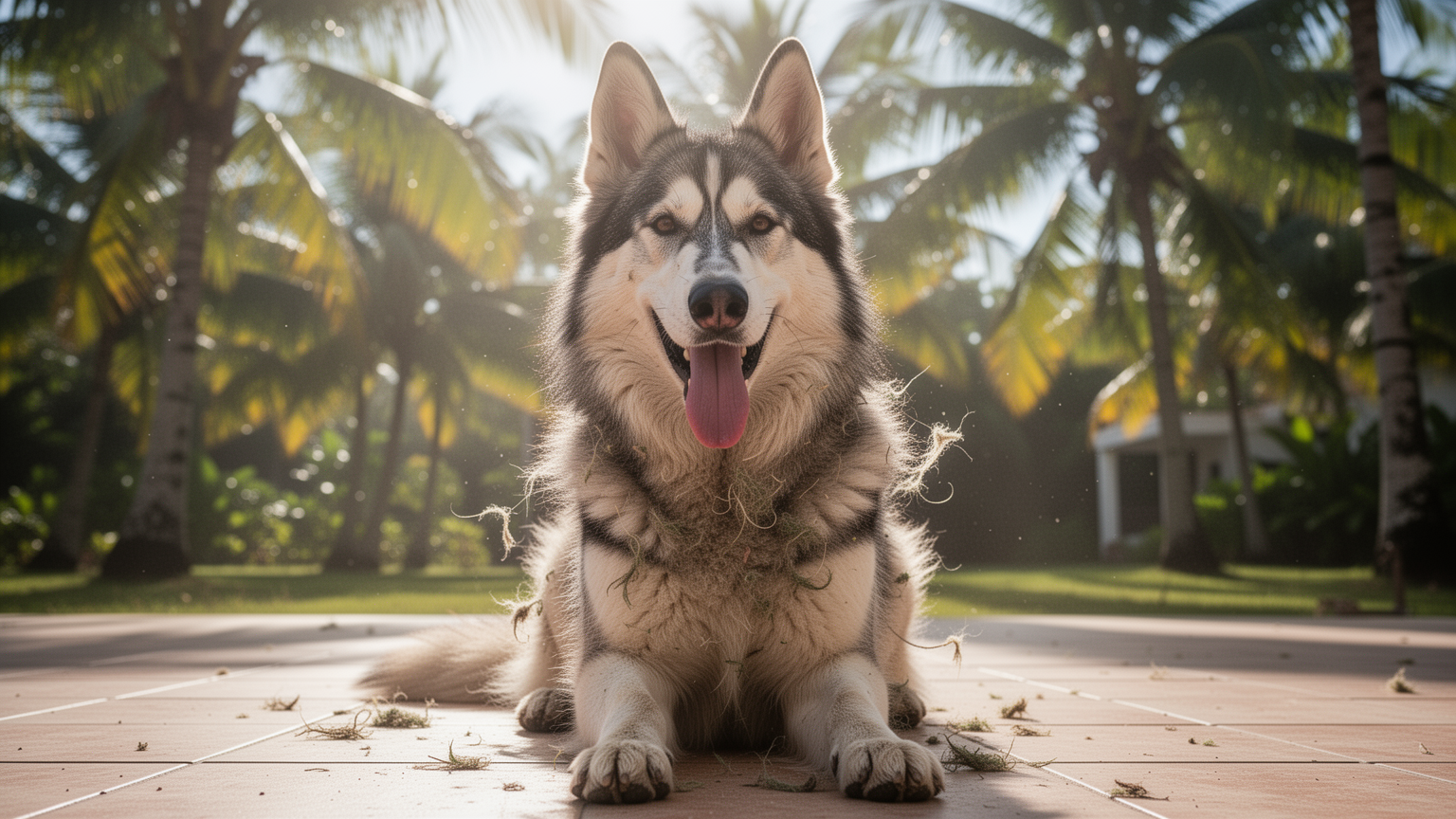
Higher risk (origin: cold climates): - German Shepherds - Golden Retrievers and Labradors - Siberian Huskies - Alaskan Malamutes - Bernese Mountain Dogs - Corgis - Rough Collies
These breeds shed year-round and heavily during seasonal transitions. In tropical heat, they need de-shedding every 3-5 weeks to stay comfortable.
Moderate risk (mixed or hot-climate origin): - Australian Shepherds - Border Collies - Shetland Sheepdogs - Poodle mixes with double coats
These may tolerate heat better but still benefit from regular de-shedding.
The AKC emphasizes that double-coat function is breed-specific and that removing the coat changes its purpose and structure. A Siberian Husky's coat is fundamentally different from a Border Collie's, even though both are double-coated.
If you're unsure about your dog's specific coat type, ask a groomer or veterinarian familiar with the breed. Coat genetics matter.
Nutrition and Skin Health to Support Coat in Heat Stress
De-shedding removes dead hair, but nutrition and hydration keep new hair and skin healthy during the stress of heat and heavy shedding.
What to focus on:
- Protein (25-30% for adult dogs): Supports hair growth and skin repair. Look for named meat sources (chicken, fish, beef).
- Omega-3 and omega-6 fatty acids: Reduce inflammation, strengthen the skin barrier, and reduce excess shedding. Fish oil, flaxseed, and chicken fat are good sources.
- Zinc and vitamin E: Antioxidants that protect skin against heat damage and UV exposure.
- Fresh water, always available: Heat stress increases fluid loss through panting and shedding. Dehydration worsens skin and coat quality.
If your dog sheds heavily or has dry, flaky skin despite regular de-shedding, talk to your veterinarian about whether a skin-specific diet would help.
Other non-grooming cooling practices: - Keep your dog indoors or in shade during the hottest hours (10 a.m. to 4 p.m.) - Exercise early morning or evening - Provide cool (not cold) water to drink - Use a cooling mat or wet towel if your dog overheats
Grooming alone will not keep a dog cool in extreme heat. The coat works with behavior and environment, not instead of it.
FAQ
Q: Is it normal for my double-coated dog to shed more in Thailand than they did in a colder climate?
A: Yes. Heat, humidity, and day length all trigger heavier shedding. Most double-coated dogs shed year-round, but shedding accelerates in warm months. This is normal and expected, not a sign of illness. De-shedding every 3-6 weeks will manage it.
Q: Can I bathe my dog more often to help with shedding?
A: Bathing can loosen shed hair and is fine once weekly during peak shedding, but frequent bathing with harsh shampoo can dry out skin and make shedding worse. Use a moisturizing shampoo formulated for dogs, and always follow with a rinse. If you bathe more than once weekly, reduce grooming that week to avoid over-washing.
Q: My dog has a mat close to the skin. Should I shave it out or try to de-shed around it?
A: Small mats can often be brushed or raked out gently before they tighten. If the mat is close to skin and won't budge, a groomer can use a mat splitter (a tool that cuts the mat from underneath without cutting skin). Only if the mat is severe, infected, or causes pain should shaving be considered-and even then, with veterinary approval. Mat prevention through regular de-shedding is much easier.
Q: How do I know if my dog is overheating versus just panting normally?
A: Normal panting in heat is steady, responsive (slows when the dog cools down), and the dog is alert. Signs of heat stress include excessive drooling, lethargy, difficulty standing, pale gums, or vomiting. If you see any of these, move your dog to a cool place immediately and contact a veterinarian. Grooming will not substitute for emergency care.
Q: Can I de-shed my dog myself, or do I need a professional?
A: You can de-shed at home with a rake or blower if you have time and your dog is calm. Many owners do this successfully. Professional de-shedding is a good option if your dog has a very dense coat, you're unsure of technique, or you don't have time. Start at home if you want to try; switch to professional help if home methods aren't keeping up.
Sources
American Kennel Club - Expert Advice - breed characteristics, double-coat function, and grooming recommendations for breed-specific care.
VCA Animal Hospitals - Know Your Pet - de-shedding safety, grooming frequency in warm climates, and professional grooming guidance.
Royal Canin - About Cats and Dogs - coat structure, heat stress on skin barrier, and nutritional support during tropical climate exposure.
Hill's Pet Nutrition - Dog Skin Conditions - skin and coat health, fatty acid requirements, and nutrition during heat stress.