Grooming Guide for Poodles, Shih Tzus, Maltese, and Pomeranians in Thailand's Tropical Climate
Grooming needs differ significantly across these four breeds-poodles need professional clipping every 4-6 weeks, Shih Tzus require daily brushing and clipping every 6-8 weeks, Maltese dogs need constant coat maintenance, and Pomeranians shed heavily but need less frequent professional work. In Thailand's heat and humidity, all four breeds benefit from specialist groomers who understand breed-specific coat structure and can prevent heat stress, though the urgency varies. This guide compares coat types, frequency, costs, and when a specialist matters for each breed.
Why These Four Breeds Need Different Grooming Approaches
These breeds look different for a reason: their coats are built differently. A poodle's coat grows continuously and needs structural clipping. A Shih Tzu's coat is flat and prone to matting. A Maltese's coat is silky but fragile. A Pomeranian's coat is a double layer that sheds in waves.
Thailand's tropical climate adds pressure. High humidity accelerates skin issues, mold can grow in wet coats, and heat stress is a real risk if a coat is left too long or clipped incorrectly. Understanding your breed's coat type-not just your breed's look-helps you plan grooming that keeps your dog healthy, not just stylish.
Breed-by-Breed Coat & Grooming Needs Comparison
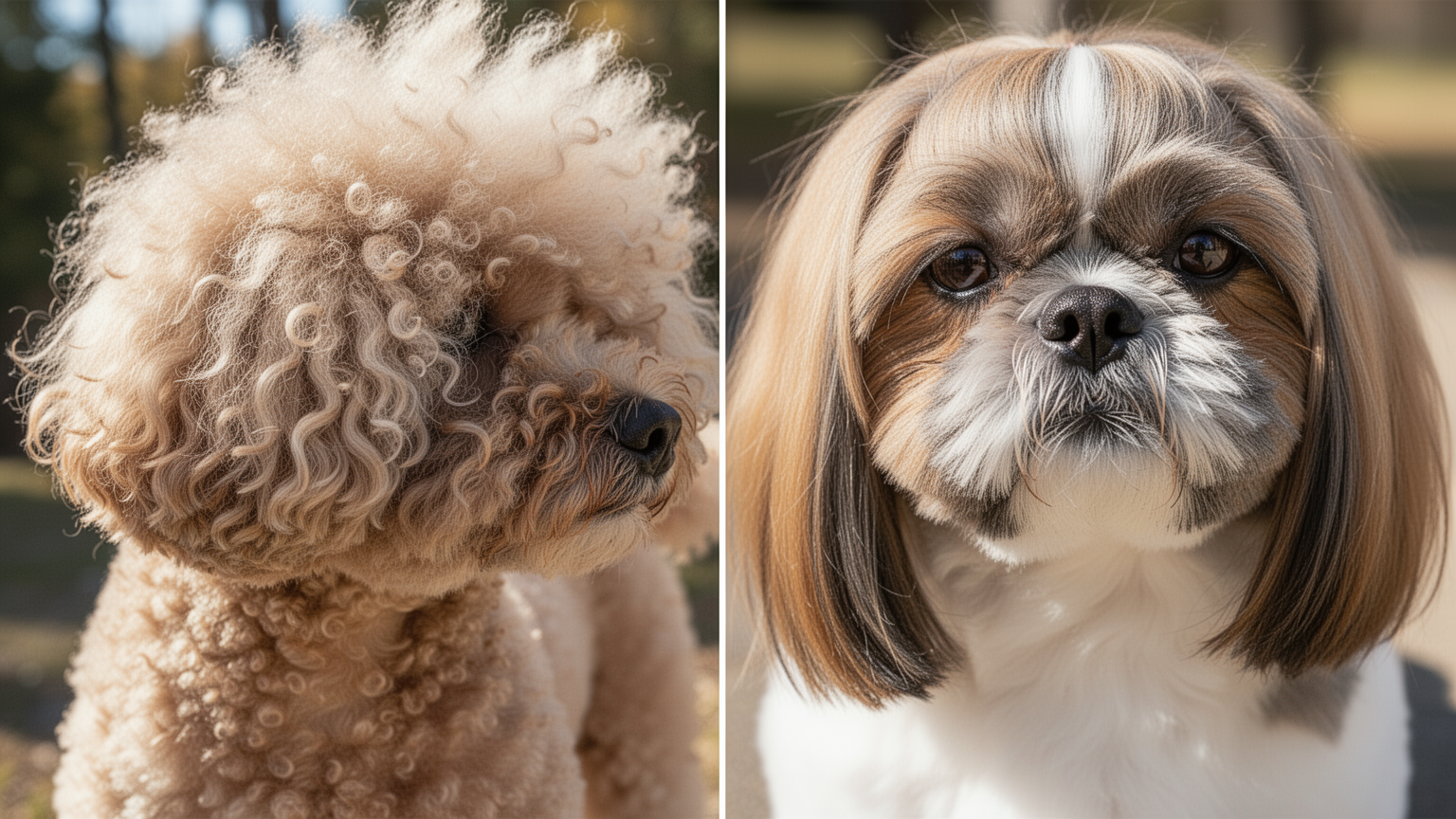
Poodle
Coat type: Curly, non-shedding, continuously growing.
Poodles have hair, not fur. It grows indefinitely without shedding, which is why they need regular clipping-the coat doesn't self-regulate length. The curly structure traps moisture and debris, making them prone to matting in humid climates.
According to the Poodle Club of America, grooming is non-negotiable for poodle coat health. The breed requires professional clipping every 4-6 weeks to prevent matting and maintain skin health. Between clips, daily brushing is the standard. In Thailand's humidity, weekly professional baths (not full clips) between grooming appointments help prevent moisture buildup and fungal issues.
Poodles are also prone to ear infections due to hair growth inside the ear canal. A competent groomer will clean ears as part of routine maintenance.
Shih Tzu
Coat type: Long, silky, flat, continuously growing.
Shih Tzus have a coat that lies flat against the body and mats easily. Unlike poodles, their coat grows to a predetermined length but is held in place by continuous daily brushing. The hair structure is finer than a poodle's and breaks easily if brushed incorrectly.
Per AKC breed guidance, Shih Tzus require daily brushing to prevent mats-there's no shortcut around this. The breed is clipped every 6-8 weeks. In tropical climates, daily brushing becomes even more critical because humidity causes hair to swell slightly, making mats tighter and faster to form.
Many owners in humid climates opt for a shorter clip style (often called a "puppy cut") to reduce maintenance burden. This is acceptable for a pet dog, though it differs from traditional show presentation.
Maltese
Coat type: Long, silky, white, continuously growing.
Maltese dogs have the most fragile coat of the four breeds. The hair is incredibly fine and tangles easily. Unlike a poodle's curly structure, which holds a clip shape, a Maltese coat is straight and requires either daily brushing or regular clipping to manage.
The breed also stains easily-tears, saliva, and soil show on white hair. This means more frequent professional baths are common, even when full grooming isn't scheduled. In humid climates, moisture trapped in a long Maltese coat can lead to skin irritation quickly.
Grooming frequency mirrors the Shih Tzu (every 6-8 weeks for a clip, daily brushing for a long coat). Many owners choose clipping for practicality. The breed is high-maintenance either way.
Pomeranian
Coat type: Double coat (dense, fluffy), heavy shedding, self-limiting length.
Pomeranians have a thick double coat-a dense undercoat under a longer topcoat. Unlike the other three breeds, their coat does not grow indefinitely. It sheds heavily twice a year (or more in warm climates) but maintains a natural length.
Per AKC guidance, Pomeranians need brushing 3-4 times a week year-round and daily during shedding season. They rarely need professional clipping unless matted or heavily shed. The breed benefits from professional de-shedding treatments during shedding season but can be maintained at home with the right tools.
In Thailand's heat, the shedding cycle may shift or occur more frequently due to constant warmth. Professional grooming is more about managing shedding than structural grooming.
Clip Styles & How They Differ Across the Four Breeds
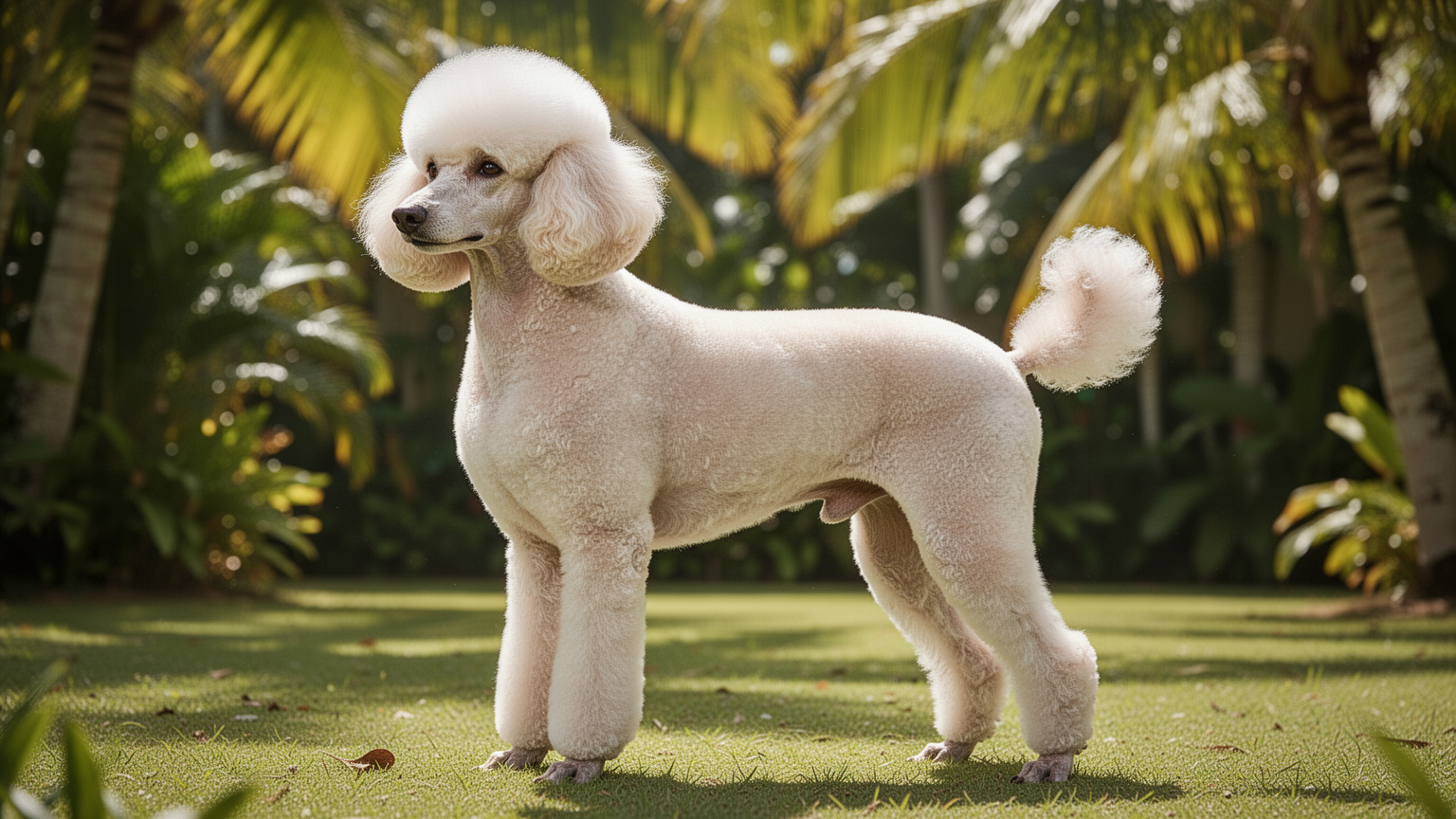
Clip style choices affect how often grooming is needed and how well a dog tolerates heat.
Poodles: The breed has defined clip styles recognized by breed clubs-Puppy Clip (even length all over), Continental Clip (pom-poms on legs and chest, shaved body), English Saddle Clip (similar to Continental with variations), and Sporting Clip (practical, shorter, less grooming-intensive). Each requires different skill to execute. Sporting or Puppy clips work well in tropical climates because they're shorter and dry faster.
Shih Tzus: A long "show coat" (kept flowing, parted down the middle) requires daily brushing and frequent baths but no clipping. A "puppy cut" or "teddy bear cut" (short, rounded, fluffy) requires clipping every 6-8 weeks and daily brushing but is far more manageable. A "summer cut" (very short, 1-2 inches) minimizes heat stress and maintenance.
Maltese: Similar options to Shih Tzus. A long coat requires daily brushing. A "puppy cut," "teddy bear cut," or "short clip" (all variations of a shorter, manageable length) require professional clipping every 6-8 weeks and daily to weekly brushing. The breed tolerates short clips well in hot climates.
Pomeranians: No breed-standard clip styles exist. The coat is managed through brushing and, during shedding, de-shedding treatments. Full-body shaving is not recommended for double-coated breeds like Pomeranians because it can damage coat regrowth and remove the dog's natural insulation. A professional groomer may hand-strip or use finishing combs, but the goal is to maintain, not reshape, the coat.
Grooming Frequency in Thailand's Tropical Climate
Heat and humidity change grooming schedules.
Poodles: Standard frequency is every 4-6 weeks. In tropical climates, aim for every 4 weeks to prevent moisture buildup in the curly coat. Add a professional bath every 2 weeks between full grooms.
Shih Tzus: Every 6-8 weeks for clipped coats. If keeping a long coat, daily brushing is non-negotiable, and professional baths every 1-2 weeks are essential to prevent fungal issues.
Maltese: Every 6-8 weeks for clipped coats. For long coats, daily brushing and professional baths every 1-2 weeks. The breed is vulnerable to moisture-related skin issues, so don't skip baths.
Pomeranians: No routine clipping needed. Brush 3-4 times weekly year-round. During shedding season (which may be extended or occur more frequently in warm climates), brush daily or seek a professional de-shedding treatment every 4-6 weeks.
The pattern: longer, softer coats (Shih Tzu, Maltese) need more frequent professional attention in humidity. Poodles need regular clipping to manage growth. Pomeranians need heavy brushing management but less frequent professional grooming.
Specialist Groomer vs. Generalist: Which Breed Needs What
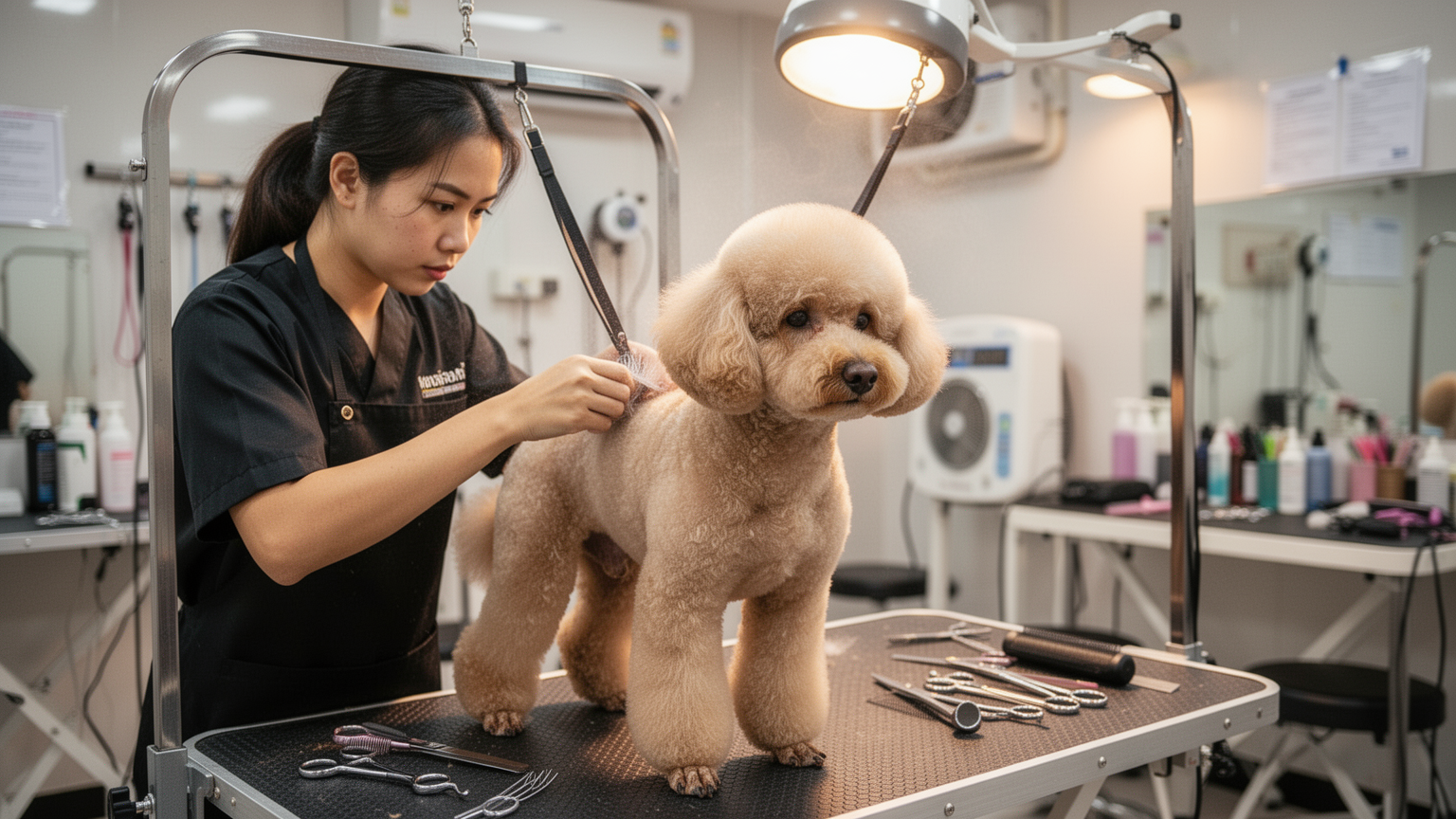
This is the key decision for booking.
A specialist groomer is trained specifically in a breed's coat structure, historical grooming standards, and common breed-specific issues. A generalist has broad experience across many breeds and can handle routine grooming competently.
Poodles: Specialist strongly preferred.
Poodle coat and clip styles are highly specialized. The Poodle Club of America emphasizes that poodle grooming requires understanding the coat's curl pattern, proper scissor technique, and appropriate clip structure. A poodle in the wrong hands can end up with a coat that mats more easily or skin irritation from improper clipping angles. If you want a specific clip style (Continental, English Saddle, Sporting), you need someone trained in that style. A generalist can bathe and do a basic puppy cut; a specialist ensures the coat stays healthy long-term.
Shih Tzus: Specialist preferred, generalist acceptable with careful selection.
Shih Tzus have a distinctive coat that requires technique to prevent breakage. A specialist understands the breed's facial structure and how to groom around the eyes safely. That said, a competent generalist with Shih Tzu experience can do well. The main risk: improper brushing during grooming can damage the coat permanently. Ask a potential generalist groomer directly: "How many Shih Tzus do you groom a month?" If they look blank, that's a red flag.
Maltese: Specialist preferred.
Maltese coats are exceptionally fragile. The breed is also prone to tear staining and skin irritation. A specialist knows how to handle the fine hair without breaking it, how to prevent matting during the groom itself, and recognizes early signs of skin issues. A generalist who grooms many breeds may not move carefully enough with a Maltese coat.
Pomeranians: Generalist acceptable; specialist helpful for de-shedding.
Pomeranians are less coat-specific than the other three. A competent generalist can brush and maintain a Pomeranian's coat. A specialist becomes useful when you want professional de-shedding services or hand-stripping-more advanced techniques that reduce shedding beyond what brushing alone achieves. For routine grooming, a good generalist is fine.
How to assess a groomer's competence (any breed):
- Ask how long they've groomed the breed.
- Request to see photos of the breed they've groomed.
- Ask about their certification or training (AAHA-accredited facilities maintain higher safety standards).
- Inquire about their approach to handling heat stress and how they cool dogs after grooming.
- Confirm they use breed-appropriate bathing and drying techniques.
- Check if they can explain the coat type and grooming goals in their own words.
Grooming Costs in Bangkok: Price Ranges by Breed
Pricing varies widely based on groomer experience, location, and facilities. These are typical market ranges for Thailand in 2024, but confirm exact pricing with your chosen groomer.
Poodles: 800-1,500 THB for a full groom. Specialist groomers are toward the higher end. Add 200-400 THB for additional baths between appointments.
Shih Tzus: 700-1,400 THB for a clip-style groom. Long-coat maintenance (professional baths and light conditioning) runs 300-600 THB per visit.
Maltese: 800-1,500 THB for grooming. Because the breed requires frequent professional baths to prevent staining and irritation, expect additional 300-500 THB per bath visit every 1-2 weeks.
Pomeranians: 600-1,200 THB for routine grooming and de-shedding. De-shedding treatments alone (without full grooming) run 400-800 THB.
Factors that shift cost:
- Groomer experience and specialization. Specialists charge more.
- Coat condition. A heavily matted coat costs more to groom because it takes longer and requires extra care.
- Add-on services. Ear cleaning, nail grinding, anal gland expression, and flea treatments add 50-200 THB each.
- Facility standards. AAHA-accredited or high-end facilities cost more but maintain strict safety protocols.
None of these breeds is cheap to groom long-term. Budget at least 3,000-5,000 THB per month for professional grooming on a regular schedule, depending on breed and clip style chosen.
FAQ
Q: Can I groom my dog at home to save money?
A: Bathing at home is fine. Clipping and scissoring are much harder. Poodle, Shih Tzu, and Maltese coats require specific technique and equipment that professionals have. Attempting to clip without training risks uneven results, skin cuts, and coat damage. Pomeranians can be brushed and hand-stripped at home with proper tools and training, but de-shedding is still better left to professionals. If cost is the concern, book every 8-10 weeks instead of 6, and brush daily at home to extend time between appointments.
Q: Is it safe to shave these breeds short in tropical heat?
A: It depends on the breed. Poodles, Shih Tzus, and Maltese can safely wear shorter clips (1-2 inches) without health risk. Pomeranians should not be fully shaved because their double coat is designed for temperature regulation; removing it can damage regrowth and leave them vulnerable to sunburn and heat stress. Consult a breed-specialist groomer about safe short options for a Pomeranian.
Q: How do I know if my groomer is making my dog's matting worse?
A: A good groomer prevents matting, not causes it. If your dog is matting more frequently after grooming, the issue is either insufficient brushing between appointments at home or the groomer isn't using proper technique (e.g., using a slicker brush too hard, not fully drying the coat). Ask your groomer directly how to prevent matting and follow their at-home routine. If matting continues, switch groomers.
Q: My dog hates grooming. Are some breeds easier than others?
A: Pomeranians are usually the most tolerant because they require less time on the table. Poodles are generally cooperative if socialized early. Shih Tzus and Maltese can be anxious because their coats are sensitive and they feel pressure from tools more acutely. A calm, experienced groomer (especially a specialist) makes a big difference. Bring your dog to the groomer for a visit without grooming first to build familiarity.
Q: Should I book a mobile groomer or a salon?
A: Both are valid. Salons offer controlled environments, multiple staff, and backup if one groomer is sick. Mobile groomers offer one-on-one attention and less handling stress. For specialist work (particularly poodles), salons with multiple groomers on staff are safer because you can request a poodle specialist. For Pomeranians and routine grooming, either works. Ask about experience, certifications, and how they handle emergencies or complications.
Sources
Poodle Club of America - Grooming Your Poodle - breed-specific coat structure, clip styles, and maintenance requirements.
American Kennel Club - Expert Advice on Grooming - baseline grooming frequency and coat care standards for all four breeds.
AAHA - Your Pet - professional grooming standards and safety protocols for accredited facilities.
Royal Canin - Coat & Skin Health - coat condition, nutrition, and climate-related skin and coat considerations.