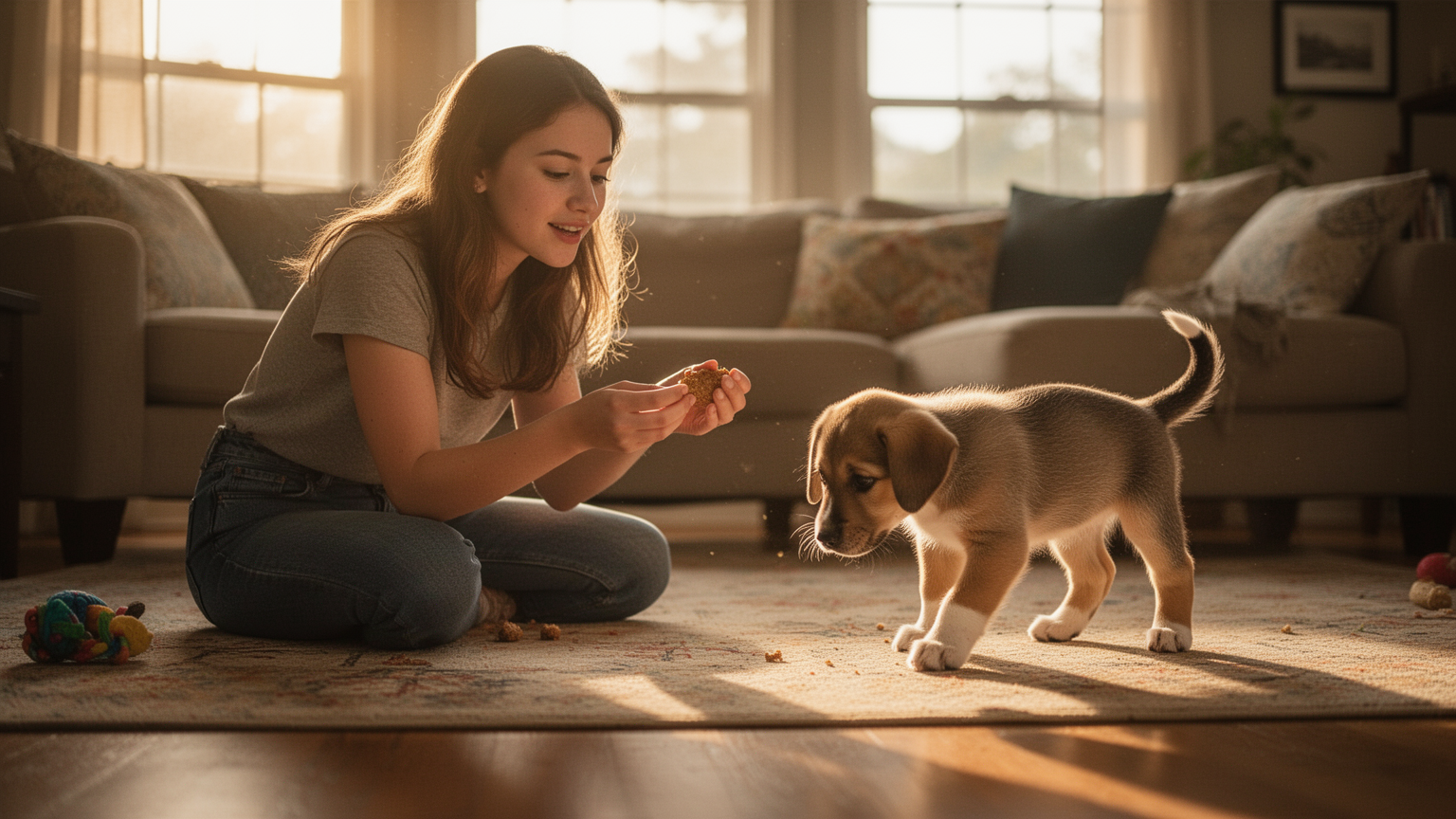
How to Build Confidence in Your Shy Puppy: A Step-by-Step Guide
You can help your shy puppy become confident and comfortable around people, animals, and new places through gentle, patient exposure combined with positive experiences and a secure home base. The process takes weeks to months, not days, but real progress is possible starting this week.
Shyness in puppies is common and often improves with the right approach. This guide walks you through exactly what to do, why it matters, and how to recognize whether your puppy is moving forward.
Understanding Shyness in Puppies: Root Causes and Signs
Puppy shyness shows up differently in different dogs. Your puppy might hide behind you when meeting new people, freeze during car rides, or back away from other dogs. Some shy puppies bark defensively; others go completely quiet.
Shyness usually comes from one or more of these sources:
Early environment. Puppies who didn't meet many people, places, or other animals before 12-16 weeks of age are more likely to be cautious later. If your puppy came from a shelter, rescue, or breeder with limited exposure, this is probably part of the picture. Early experience matters, but it's not the whole story.
Genetics. Some breeds and individual puppies are born with a naturally reserved temperament. This is just how they're wired-not a flaw.
Past experience. If your puppy had a scary moment (loud noise, rough handling, a sudden change), shyness can develop afterward. Rescue puppies often come with an unknown history.
Lack of confidence in new situations. Your puppy hasn't learned yet that new things are usually safe.
The key point: shyness is different from aggression. A shy puppy is afraid, not attacking. A shy puppy retreats, whines, or freezes-it doesn't lunge or bite. If your puppy is showing aggression (growling, snapping, biting), talk to a veterinary behaviorist rather than following this guide alone.
Signs your puppy is shy:
- Hides or seeks your legs when meeting people or in new places
- Doesn't approach toys, treats, or people without encouragement
- Startles easily at sounds
- Backs away from other dogs instead of approaching to sniff
- Refuses to walk through doors, down stairs, or into new rooms
- Freezes and won't move during car rides or vet visits
- Won't eat or play when nervous
Pre-Socialization: Creating a Safe Foundation
Before you take your puppy anywhere new, you need a solid home base. Your puppy needs to know that home is safe, that you're reliable, and that staying calm works better than panicking.
Build trust at home first.
Spend your first week or two just being together. Play gently. Let your puppy explore your home at their own pace. Don't force interaction. If your puppy wants to sit quietly nearby while you're on the couch, that's fine-they're learning you're safe and predictable.
Establish a routine for feeding, potty breaks, and sleep. Puppies feel safer when life is predictable. If bedtime is always at 9 p.m., naptime after meals is always in the same spot, and food appears at the same times, your puppy's nervous system settles down.
Create a safe zone.
Pick a quiet, low-traffic corner of your home-a crate, a playpen, or a small room. This is where your puppy goes when overwhelmed. No forcing. Your puppy should choose to go there. Put a comfortable blanket, a safe toy, and maybe a shirt that smells like you inside. This space says, "When the world is too much, you can rest here."
Handle your puppy gently and often.
Let your puppy get used to being touched. Gently touch their paws, ears, mouth, and belly during calm moments. This matters because vets, groomers, and other people will need to touch your puppy eventually. If they're comfortable with handling at home, it's less scary elsewhere.
Keep these sessions short-10 to 30 seconds-and stop before your puppy gets annoyed. Follow it with a treat or praise.
Let your puppy set the pace indoors.
If your puppy is afraid of the stairs, don't carry them up and down. Instead, sit at the top or bottom and let them explore on their own time. Toss a treat toward the stairs. Leave it there. Come back tomorrow and do it again. Your puppy will eventually climb those stairs because they decided it was safe-not because you made them.
This is the foundation. A puppy who feels secure at home is much easier to help in the wider world.
Step-by-Step Socialization Techniques
Socialization means exposing your puppy to new people, animals, places, and situations in a way that feels manageable. The goal is for your puppy to learn: "New things might be interesting. They're usually not scary."
Week 1-2: Single person, controlled setting.
Start small. Invite one calm, patient friend or family member to your home. Ask them not to reach out or make eye contact right away. Let your puppy approach when ready. If your puppy hides, don't force a greeting. Your guest can sit down, turn slightly away, and let your puppy decide what happens next. Dropping a few treats on the floor nearby helps.
This teaches: "New people appear, and nothing bad happens."
Week 3-4: Expand to two or three visitors and brief outings.
By now, your puppy has learned that strangers in your home are usually fine. Invite a couple of different people-an older adult, maybe a young person, someone with a calm voice. Vary it.
Start taking your puppy outside in a quiet area near home: a quiet street, an empty park early in the morning, a backyard where they can see the neighborhood from a distance. Bring high-value treats (small pieces of cheese, cooked chicken, a favorite toy). Let your puppy sniff, watch, and explore. Don't insist on walking far. Five minutes is plenty.
Week 5-6: Introduce other calm, vaccinated dogs.
Only bring your puppy around dogs you know are friendly, calm, and fully vaccinated. A friend's relaxed adult dog is ideal. Do this in a quiet, familiar place-like a backyard or quiet park. Let the dogs sniff each other without leashes if possible (and only if it's safe to do so). Watch for play-not high-energy chasing, but gentle sniffing and maybe a quick play bow.
If your puppy seems nervous, stay nearby but don't hover. Let them watch from a distance. Movement and energy build confidence over time.
Week 7-8: Busier environments and varied people.
Now your puppy is ready for environments with more activity. Think of a quiet café with outdoor seating, a park with some foot traffic, or a pet-friendly shop. Keep visits short-15 to 20 minutes. Bring treats. Sit and let your puppy observe. Don't force your puppy to say hello to everyone who asks.
Allow people to toss treats to your puppy rather than reaching out. This feels safer and less invasive.
Throughout all weeks: The treat and retreat method.
When something worries your puppy, get closer to it gradually-but always at your puppy's pace. See a person across the park? Sit down, toss a treat toward the person, then retreat. Do this a few times over several visits. Your puppy learns: "Scary thing appears, then good things happen." Over time, distance decreases.
Never force your puppy to approach, touch, or interact with anything. Forcing backfires. It teaches your puppy that you can't be trusted to keep them safe.
Handling challenges during outings.
If your puppy freezes, trembles, or tries to turn back, stop. Don't drag them forward. Sit with them, stay calm, and wait. Your nervous energy transfers to your puppy. If you're worried your puppy will fail, your puppy feels that worry. Breathe. Sit quietly for a few minutes. Then either slowly move back, or just stay put until your puppy relaxes a bit.
Recognize progress in small increments: "Last week my puppy wouldn't walk toward the door. Today they walked through it." That's success.
Common Mistakes to Avoid
Forcing social interaction.
This is the biggest one. Picking up your shy puppy and handing them to a stranger, or insisting they play with another dog, teaches them the world is unsafe and you don't listen. Don't do it. Let your puppy approach on their terms.
Isolating your puppy "for their safety."
Some owners keep shy puppies home all the time, thinking they're protecting them. Actually, this makes shyness worse. Your puppy never learns that the world is manageable. Find the middle ground: quiet exposure, not overwhelming situations.
Responding to fear with extra attention.
When your puppy trembles or hides, it's natural to comfort them. But sometimes this actually rewards the fearful behavior. Instead, stay calm and neutral. Don't praise your puppy for being scared. Once they relax a bit, then you can praise them for being brave.
Moving too fast.
Your timeline isn't the timeline. If your puppy isn't ready for busier parks after week 4, that's fine. Some puppies need 8-12 weeks or longer to build confidence. Pushing too hard creates setbacks.
Skipping the vet, groomer, and car rides.
These are easy to avoid because they're annoying. But your puppy needs to learn they're safe too. Start car rides early with very short trips. Let your puppy visit the vet clinic just to get a treat and say hello to staff-not just for exams. Make grooming and handling normal before any real grooming happens.
Building Confidence Over Time: Milestones and Progress
Progress looks like: your puppy taking longer to hide, approaching new things faster, playing more freely, recovering from scares more quickly.
Early signs of progress (weeks 1-4):
- Your puppy eats treats when nervous instead of rejecting food
- Your puppy stays in the same room as visitors instead of disappearing
- Your puppy looks at you for reassurance, then explores a bit
- Your puppy approaches a toy or treat after hesitation
Moderate progress (weeks 5-12):
- Your puppy initiates play with another dog or approaches people first
- Your puppy walks through new doors, up stairs, or into new rooms without freezing
- Your puppy recovers from a scare (loud noise, sudden movement) in under a minute
- Your puppy explores during outings instead of just staying close to you
Significant progress (3-6 months):
- Your puppy wags their tail at strangers instead of hiding
- Your puppy plays with calm dogs without constant reassurance
- Your puppy handles vet visits, car rides, and new places with mild nervousness, not terror
- Your puppy makes choices to investigate rather than always waiting for permission
Not every puppy follows this timeline. Some puppies are confident by week 6. Others need 6-12 months. Genetics, past experience, and your consistency all play a role.
Setbacks are normal. One scary experience can temporarily set progress back. Your puppy might suddenly avoid the park where a large dog chased them. This doesn't erase earlier progress-it's just a bump. Go back to the quieter park for a few weeks. Then try again.
When to Seek Professional Help
Most shy puppies improve with consistent, patient effort at home. But some situations need expert guidance.
Talk to a veterinary behaviorist (not a general vet) if:
- Your puppy shows signs of fear-based aggression (growling, snapping, lunging) as well as shyness
- Your puppy has intense panic responses (refusing to move, severe trembling, incontinence) that don't improve after 8-12 weeks of gentle exposure
- Your puppy's fear is spreading to things they used to handle fine
- You're feeling frustrated or uncertain about how to proceed
A veterinary behaviorist can rule out anxiety disorders that might benefit from medication alongside training. They can also design a plan tailored to your puppy's specific triggers.
A certified professional dog trainer (look for credentials from organizations that emphasize humane methods) can also help if you're uncertain about pacing, handling mistakes, or specific scenarios like vet visits or car rides.
You don't need professional help for mild shyness managed well at home. But there's no shame in getting help. A few sessions can clarify your approach and speed up progress.
FAQ
Can I socialize my puppy too much?
Not really, if you're paying attention to your puppy's stress signals. Over-socialization isn't the issue. Under-controlled socialization is-like a puppy meeting 20 loud kids at once. Aim for small, manageable exposures, not overwhelming ones.
My puppy is 6 months old and still very shy. Is it too late?
No. The critical socialization window is roughly 3-16 weeks, but puppies can still learn confidence after that. It usually takes longer-maybe 6-12 months instead of 8 weeks-but progress is still very possible. Start now.
Should I get another dog to help my puppy become confident?
Only if your puppy already likes dogs. Getting a second dog to "teach" a shy puppy sometimes backfires-your puppy might become more withdrawn. Focus on building confidence with single, calm dogs your puppy already meets outside. Add another dog to your home only if you want one anyway.
How do I know if my puppy is just introverted rather than actually shy?
An introverted puppy is calm and content in quiet settings but approaches friendly people or dogs when given the chance. A shy puppy actively avoids or retreats from interaction. If your puppy will eventually come sniff a visitor's hand, or will play with a calm dog after a few minutes, that's closer to introversion. If your puppy always hides, that's shyness. The difference matters for how you approach it-shy puppies need gentle confidence-building; introverted puppies just need respect for their quieter nature.
Is shyness genetic? Did I cause it?
Shyness has a genetic component-some puppies are born more cautious. But environment, early experience, and how you respond also matter. If you just brought your puppy home and they're shy, you didn't cause it. Your job now is to help them improve, which you're already doing by reading this.
References
American Society for the Prevention of Cruelty to Animals (ASPCA) (2023) Puppy Socialization. Available at: https://www.aspca.org (Accessed: November 2024).
Association of Professional Dog Trainers (APDT) (2023) Understanding Fear and Anxiety in Dogs. Available at: https://apdt.com (Accessed: November 2024).
Miller, P.E. (2019) The Power of Positive Dog Training. Dogwise. pp. 45-78.
International Association of Animal Behavior Consultants (IAABC) (2022) Best Practices in Fear and Anxiety Assessment. Available at: https://www.iaabc.org (Accessed: November 2024).