How to Choose a Dog Boarding Facility You Can Trust
Choosing the right boarding facility comes down to knowing what safety and care standards to expect, what to look for when you visit, and what questions to ask the staff. This article walks you through a practical framework so you can compare options confidently and make a decision you feel good about.
Why Choosing the Right Facility Matters
Boarding your dog means leaving them in someone else's care for hours or days. During that time, you won't be there to notice if something goes wrong-whether that's a health issue, an injury, or simply that your dog is stressed and not being comforted. A good facility prevents those problems through design, training, and attention. A careless one doesn't.
The stakes are real but manageable. Most boarding experiences go smoothly because owners who care enough to choose carefully tend to find places that care about dogs. Your job is to not be the owner who skips this step.
Must-Have Facility Standards and Certifications
Before you tour anywhere, know what minimum standards exist and how they show up in practice.
Accreditation and licensing
The gold standard in boarding facility operations is accreditation by the American Animal Hospital Association (AAHA). AAHA-accredited facilities must meet detailed standards for cleanliness, safety protocols, staff training, and veterinary oversight. Accreditation is not mandatory in most places, but it signals that a facility has voluntarily submitted to third-party inspection and continuous compliance.
Not every good facility is AAHA-accredited-accreditation costs money and requires paperwork-but if you find one that is, it removes a lot of guesswork. If a facility is not accredited, ask why. The answer should be honest: cost, new ownership, timing of application, etc. Evasion is a bad sign.
Veterinary oversight
A boarding facility should have a relationship with a licensed veterinarian. At minimum, the facility should be able to contact a vet quickly if a dog becomes ill or injured. Better facilities have a vet on-site during operating hours or on-call 24/7. Ask specifically who the vet is, whether they're on staff, and what happens outside business hours. A facility that can't answer this clearly doesn't have a plan.
Space and housing standards
Each dog needs its own space-a kennel, a room, or a designated area-where it can rest, toilet, and feel secure. According to industry best practices, facilities should maintain appropriate space ratios and environmental controls to prevent stress and disease transmission. What does this mean in practical terms?
- Each dog's area should be cleanable and free of sharp edges or hazards.
- The facility should control temperature and humidity (dogs overheat easily).
- Noise levels should be manageable-not silent, but not chaotic.
- There should be visible separation between dogs to reduce stress, unless they're in a group play area specifically designed for socialization.
Ask the facility what the space standard is. "Each dog gets a kennel roughly this size" or "we use a combination of individual rooms and supervised group play" are concrete answers. "Depends on the dog" is vague and worth probing.
What to Inspect During a Facility Tour
Do not book without visiting. A tour tells you things no website or phone call can.
Cleanliness and odor
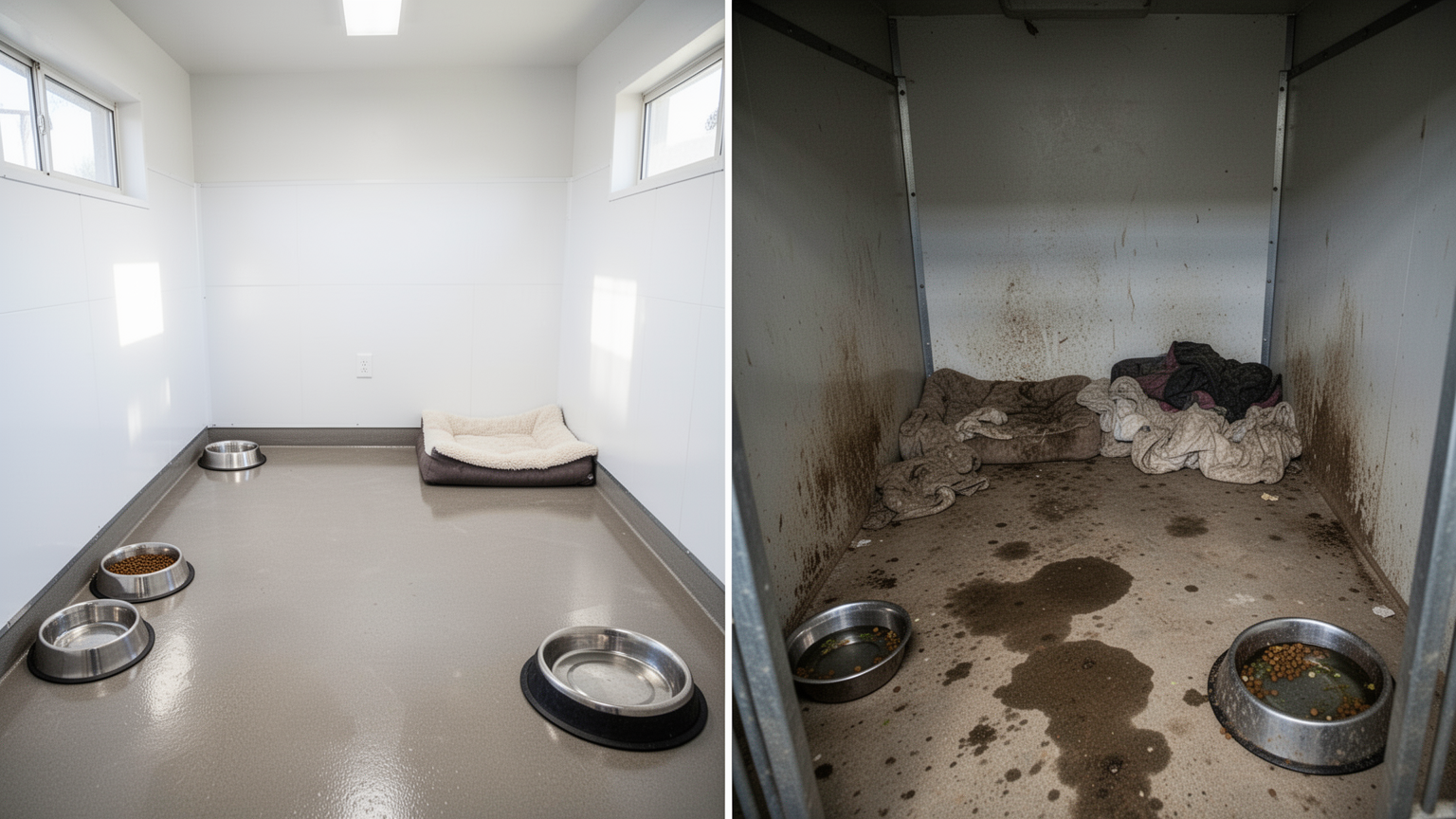
Walk into the dog area. What do you smell? Some dog smell is normal. A strong ammonia or feces smell means inadequate cleaning. Look at the floors, walls, and resting areas. Are they visibly clean or just surface-wiped? Dirty facilities breed infections and parasites-this is non-negotiable.
Ask how often areas are cleaned. Once daily is minimum; multiple times is better, especially after meals or toileting.
Staff presence and interaction
Watch whether staff are actually present in the dog areas or mostly in an office. Proper staffing ratios are critical to safety and welfare. A facility with one person managing 20 dogs can't notice if a dog is choking, fighting, or having a medical emergency.
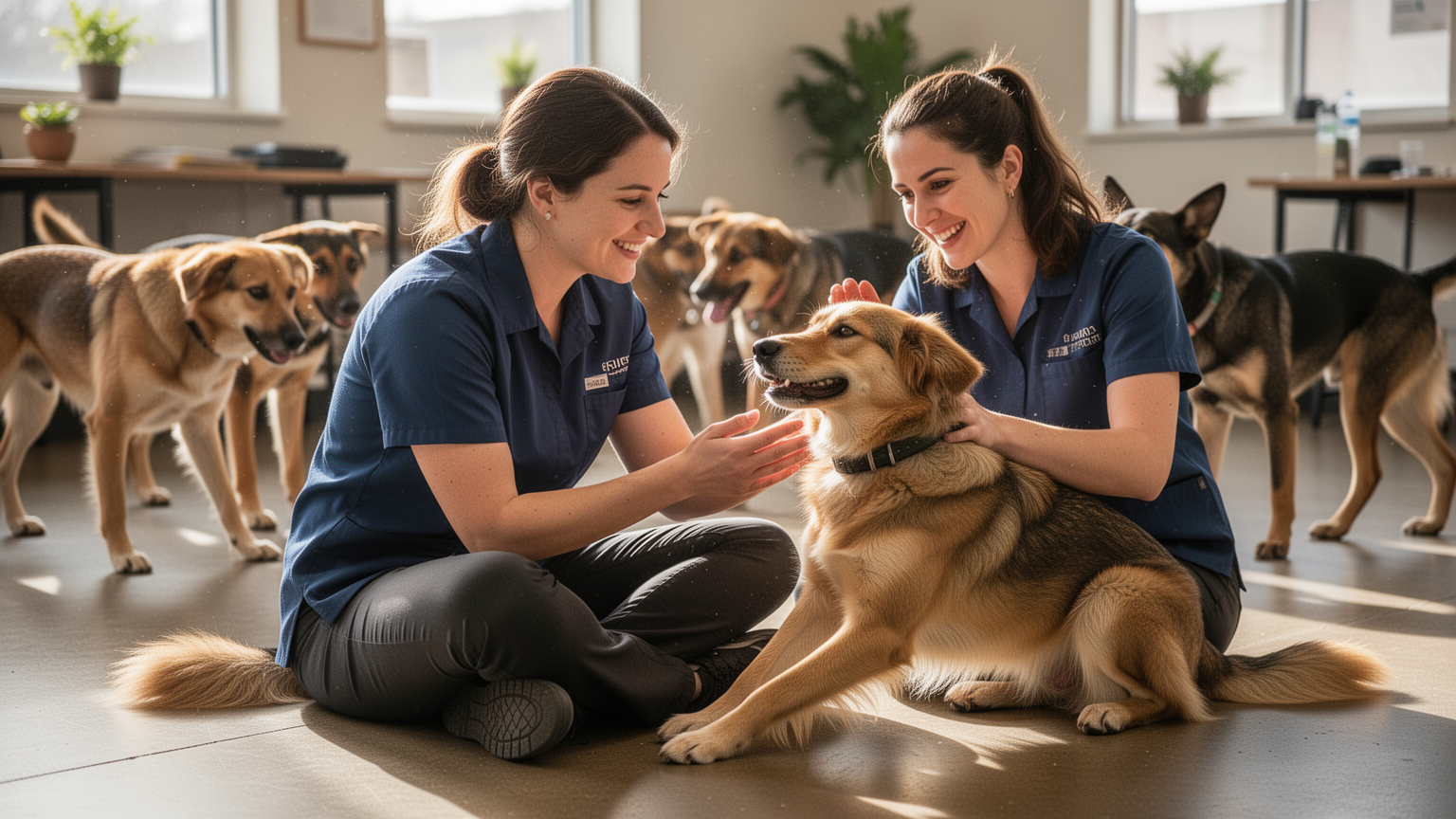
When you visit, observe: - Can staff name the dogs they're caring for? - Are they actively supervising group play, or just watching? - Do they respond calmly if a dog acts stressed or rowdy? - Do they seem to know the dogs' individual needs (this one doesn't like that one, this one needs quiet time)?
Good staff talk about individual dogs like they know them. Staff who view dogs as a group to manage rather than individuals are a yellow flag.
Water and sanitation
Fresh water should be available all day. Check the water bowls-are they clean? Is there mold or residue? Ask how often water is changed. Outdoor areas should have shade and a way for dogs to relieve themselves in a clean space. A facility that doesn't emphasize water and sanitation isn't thinking about disease prevention.
Play areas and enrichment
Dogs shouldn't sit in a kennel for 8 hours doing nothing. Most facilities offer group play, individual time, or both. Watch a group play session if possible. Are dogs playing safely? Is there a staff member supervising, stepping in if play gets too rough? A good play area has space for dogs to move, rest, or get away from others.
Ask what happens if your dog doesn't like group play. A quality facility should offer individual time or one-on-one walks as an alternative.
Isolation and health protocols
Ask where a sick or injured dog would be kept. There should be a separate area away from healthy dogs. What's the protocol if a dog shows signs of illness? Can they call a vet immediately? Is there a quarantine procedure if a contagious condition shows up?
This matters because boarding facilities are communal spaces. Disease can spread fast. A facility without a health protocol is not serious about prevention.
Key Questions to Ask Before Booking
Go to the facility with a written list. It feels formal, but it ensures you don't forget something important and it shows the staff you're a thoughtful owner.
About your dog's care
- What is the daily routine? (When does my dog eat, play, rest, toilet?)
- How is my dog matched with other dogs in group play, if applicable?
- What do you do if my dog doesn't want to socialize?
- Can you accommodate special dietary needs or medications?
- What happens if my dog gets anxious or stressed? (Do you contact me? Separate them? Change their schedule?)
About safety and emergency protocols
- Who is on-site during operating hours, and who is available after hours or overnight?
- How do you handle a dog that escapes or injures itself?
- What's your process for calling a vet, and which vet do you use?
- Do you have insurance?
- Have there been any incidents or complaints in the past year? (Be prepared for them to say no or to explain without defensiveness. Honesty here matters.)
About communication and updates
- Can I call to check in on my dog?
- Do you send photos or updates?
- How will you contact me if something happens?
- What's the check-in and check-out process?
About their experience with your dog's breed or temperament
Understanding your dog's individual behavior and needs helps you assess whether a facility can meet them. Ask: - Have you boarded dogs like mine before? - What challenges do you see with this breed? - If my dog is anxious, elderly, has health issues, or is reactive to other dogs, how would you handle it?
A facility that says "no problem" to everything is not being realistic. A facility that identifies potential challenges and has a plan is more trustworthy.
Red Flags and What to Avoid
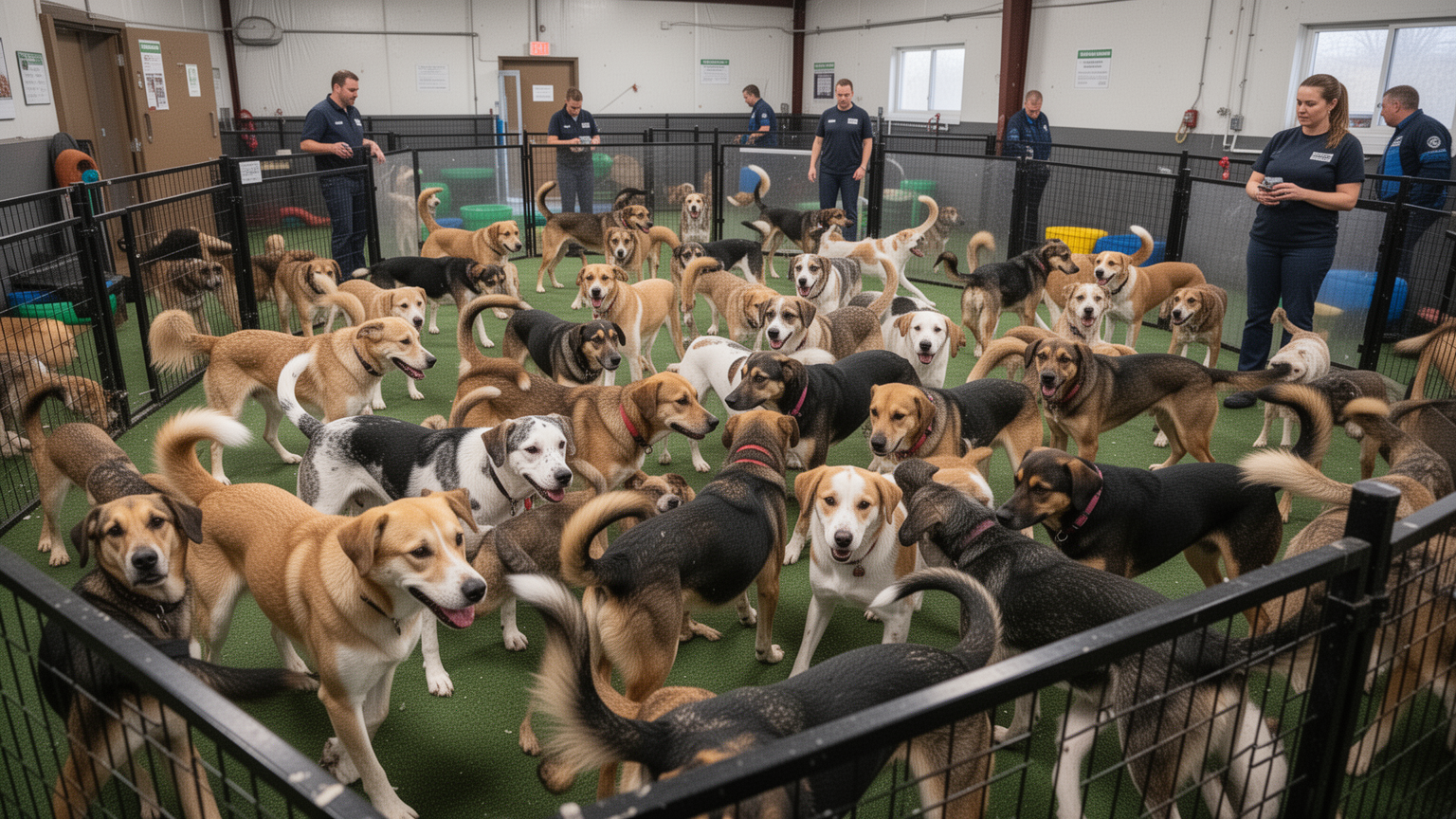
Some signs mean you should look elsewhere.
- No clear health or safety protocols. If the owner can't explain what happens if a dog gets injured or sick, they don't have a plan.
- Unwillingness to let you tour the facility. Legitimate facilities let you see where your dog will be.
- Overcrowding or chaotic group play. Too many dogs in a space, or no supervision during play, increases injury risk.
- No separate isolation area. A facility that houses sick dogs with healthy ones is risking disease spread.
- Staff who don't seem to like dogs. You'll notice the difference between someone who tolerates dogs and someone who's genuinely interested in them.
- Evasiveness about previous problems. No facility is perfect, but one that won't acknowledge issues or learn from them is a problem.
- Poor water or sanitation. If basic cleanliness isn't happening, nothing else matters.
- Pressure to book without touring or deciding. A good facility trusts its own quality and doesn't need to rush you.
Making Your Final Decision: A Comparison Checklist
After you've toured facilities and asked your questions, use this checklist to compare your options. Not every item carries equal weight-weight them based on what matters to your dog.
| Criterion | Facility A | Facility B | Facility C |
|---|---|---|---|
| AAHA-accredited or equivalent | Yes / No | Yes / No | Yes / No |
| Veterinary oversight (on-site or on-call) | Yes / No | Yes / No | Yes / No |
| Space and housing adequate for your dog | Yes / No | Yes / No | Yes / No |
| Visibly clean (odor, floors, bowls) | Yes / No | Yes / No | Yes / No |
| Staff present and engaged with dogs | Yes / No | Yes / No | Yes / No |
| Clear health and safety protocols | Yes / No | Yes / No | Yes / No |
| Can accommodate your dog's specific needs | Yes / No | Yes / No | Yes / No |
| Separate isolation area for sick dogs | Yes / No | Yes / No | Yes / No |
| Communication and updates offered | Yes / No | Yes / No | Yes / No |
| Felt comfortable with the staff | Yes / No | Yes / No | Yes / No |
Facilities that score "No" on the first five items should be ruled out. They indicate gaps in basic safety or care. For the remaining items, look for the facility that aligns best with your dog's needs and your priorities.
Then trust your instinct. If a facility is clean, staffed well, has protocols, but you just felt uncomfortable-that matters. Your comfort with the facility affects your peace of mind, which affects how you feel about leaving your dog there.
FAQ
My dog has never been boarded before. What should I do before the first stay?
Book a short, initial stay (half-day or one night) so your dog and the facility staff can get used to each other before you do a longer trip. Bring familiar items like a blanket or toy with your scent to ease the transition. Also, give the facility detailed information about your dog's routine, any anxieties, and behavioral quirks. The better they understand your dog, the better they can care for them.
What should I do if my dog comes back stressed or sick after boarding?
Contact the facility immediately to report what you observed. If your dog is showing signs of illness (lethargy, diarrhea, cough), take them to a veterinarian and mention the recent boarding stay-the vet may need to know about potential exposures. For stress, give your dog a few days of quiet time and monitor whether they settle. One stressful stay doesn't mean the facility is bad, but if it happens repeatedly, it's time to find somewhere else.
Is home-based boarding safer than a facility?
Both home-based boarding and traditional facilities can be good or bad-the model isn't what matters. Safety depends on the individual caregiver or facility, their experience, their protocols, and their environment. Home-based boarding may feel more personal, but that doesn't mean the caregiver has trained staff, emergency protocols, or veterinary oversight. Conversely, a good facility has these things by design. Evaluate each option on the criteria in this article, regardless of whether it's home-based or facility-based.
What's the difference between boarding and daycare?
Boarding means your dog stays overnight (or multiple days). Daycare means your dog comes during the day and goes home at night. Both can be good options depending on your needs. Some facilities offer both. Daycare alone doesn't require overnight accommodations, but the cleanliness, supervision, and safety standards should still apply.
How far in advance should I book?
Popular facilities and peak travel seasons can fill up, so book at least 2-3 weeks ahead if you can. Some facilities require booking even earlier during holidays. If you're booking last-minute, call ahead rather than showing up-availability may be limited or the facility may have a waiting list.
Sources
International Boarding & Pet Services Association - industry best practices for staff ratios, safety standards, and operational guidelines for boarding facilities.
AAHA - Your Pet - accreditation standards for facility cleanliness, safety protocols, and veterinary oversight in animal boarding and care.
AKC Expert Advice - guidance on dog behavior, individual needs, and owner decision-making frameworks for selecting appropriate care.